CLIFF NOTES
- Virginia Beach found contaminated groundwater during the 17th Street road project.
- The water must be treated before it can be discharged.
- Pumps and filtration units were set up on Arctic Avenue to handle it.
- Costs rose from about $43 million to about $48.8 million, but the city says it’s within budget.
- The Pacific-to-Arctic block should reopen in late May, and the next block may close around June 1.
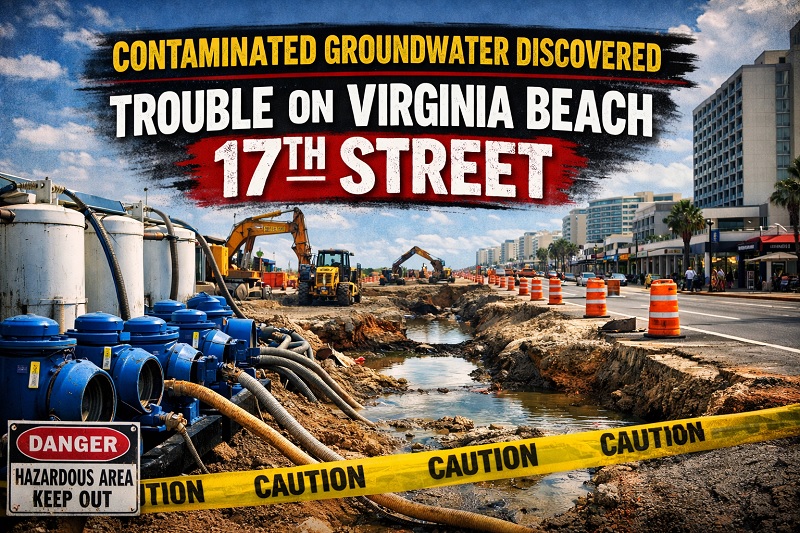
Contaminated groundwater has been found during the 17th Street improvement project at the Virginia Beach Oceanfront. The city said the water contains contaminants that must be treated before it can be discharged. The discovery is raising costs and forcing schedule changes, but the city said the work remains within the existing project budget.
What happened at the 17th Street road project?
The 17th Street improvement project began last fall and is now dealing with contaminated groundwater uncovered during early excavation work.
The project covers Virginia Beach Boulevard’s easternmost end, known as 17th Street, from Pacific Avenue to Cypress Avenue. It includes new storm, sewer, and water infrastructure, plus underground utilities. When finished, the city expects a wider road, better sidewalks, and bicycle lanes.
During excavation of the first section of road—between Pacific Avenue and Arctic Avenue—the city found groundwater with contaminants “at levels that require treatment before discharge,” according to city spokesperson Ali Weatherton, who described the issue in an email.
What contaminants did the city identify?
The city said the groundwater includes natural contaminants and “historic contaminants,” which it described as materials tied to past urban uses. The city listed examples such as fuel residues or metals.
Weatherton wrote that the contamination levels require treatment before the water can be released.
How is the city treating the groundwater?
To handle the contaminated groundwater, the city placed about a dozen blue pumps and filtration units on Arctic Avenue between 17th and 18th streets.
After treatment, the water is discharged into the city’s stormwater system, according to the city.
How much will this add to the cost?
The city said the added costs are being handled within the project’s existing budget, Weatherton said, but she did not give a number.
The project was first expected to cost $43 million, but the cost has increased to $48.8 million.
How is the schedule changing?
To reduce delays, the contractor is changing the order of some work steps, according to Weatherton.
Over the next two months, crews will keep installing utilities and then temporarily restore the road between Pacific Avenue and Arctic Avenue. The city expects that section to reopen in late May.
Construction is then expected to move to the block between Arctic Avenue and Baltic Avenue, which is expected to close around June 1.
The city expects the full project to take nearly four years.
Why does this matter for the Oceanfront?
The discovery adds another example of groundwater complicating major Oceanfront construction.
A separate Oceanfront project—construction of the surf lagoon at Atlantic Park, about a block north of 17th Street—also ran into groundwater issues. The city said that project found groundwater with higher-than-expected levels of iron and arsenic.
The city agreed this month to pay $3 million and convey several parcels of Oceanfront land to the Atlantic Park developer to settle a dispute over who should pay for that earlier groundwater problem.
Will businesses be affected?
The city said businesses along the corridor will remain open during construction.
How is the project funded?
The 17th Street improvement project is funded through public facility bonds. The Tourism Investment Program fund will pay the debt service, according to the city.
How do water treatment systems relate to contaminated groundwater?
Contaminated groundwater often needs filtration before it can be safely released or used. In some areas ground water can make it way to the lakes and rivers used to supply homes. While this water is more than likely treated at a facility, not all contaminates are removed, such as forever chemicals. Reverse osmosis systems can remove many dissolved contaminants and forever chemicals from drinking water, while whole-home water conditioners can help reduce problems tied to metals and other water quality issues. In real homes, these systems can improve taste, protect plumbing, and reduce staining from certain minerals.
Source: Virginia Pilot

 Hampton Roads VA / Northeast NC
 Jacksonville NC / Morehead City NC


