
Chesapeake Water Treatment & Water Filtration
Explore local water quality, common water problems, reverse osmosis, water softeners, PFAS filtration and well-water treatment from East Coast Water Quality.
Start With the Water Issue You Want to Solve
This Chesapeake hub connects homeowners with local water information and the treatment page that best matches their concern. Each guide goes deeper without forcing one page to cover every search intent.
Water Quality Report
See where Chesapeake water comes from, how it is treated and where to find official reporting.
View local water report →Water Problems
Explore hardness, chlorine, PFAS, lead, staining, taste, odor and other household concerns.
Explore water problems →Reverse Osmosis
Learn about highly filtered drinking and cooking water at the kitchen sink and refrigerator line.
Explore reverse osmosis →Water Softeners
Compare whole-home treatment for hardness, scale, spotting, chlorine taste and appliance protection.
Explore water softeners →PFAS Water Filters
Understand whole-home and drinking-water options designed for PFAS concerns.
Explore PFAS filtration →Well Water Treatment
Find treatment guidance for iron, sulfur odor, acidity, tannins and other private-well conditions.
Explore well-water treatment →Free Water Test
Schedule a local in-home evaluation to identify hardness and common aesthetic water concerns.
Schedule a free water test →All Water Systems
Compare East Coast Water Quality’s full lineup of whole-home and drinking-water systems.
View all products →Understanding Chesapeake Municipal Water
Chesapeake uses multiple water sources and two treatment plants. The Northwest River Water Treatment Plant treats Northwest River water plus brackish groundwater, while the Lake Gaston Water Treatment Plant treats raw water purchased from Norfolk and is supplemented by Western Branch groundwater wells. Western Branch customers also receive treated water purchased from Portsmouth.
Chesapeake water can vary significantly depending on whether your home is served by municipal water or a private well. In this local video, Chris explains why iron can be especially high in some Chesapeake well-water areas and how the type and level of iron affect treatment.
How Do I Get Iron Out of My Chesapeake Well Water?
Read Transcript
Guys, Chris here with East Coast Water Quality. Your question is, how do I get this iron out of my Chesapeake well water? Especially, guys, if you're around that Carolina line, North Carolina line, Chesapeake, Hickory, really a lot of the areas there on the outskirts, you probably notice that you have extremely high iron.
There's two types of iron really going to be looking at: ferrous iron, ferric iron, dissolved iron, or oxidized iron. And one of the things you do have as well, which we'll talk about real quickly here, is a lot of times you have the sulfur that runs with the water as well. But in a lot of parts of Chesapeake, it can really vary. A couple miles away, you could have even tannins. That's a different video, but really just talking and staying focused on the iron.
A key part to know: is it ferrous iron? Is it ferric iron? One thing you can really tell is, if you want to fill up a glass, let it sit for an hour or two and just see if it possibly turns orange at all. This is not a scientific test for you, but short version is, if it's oxidizing that fast, it's going to let us know whether we want to use a water softener or an oxidation system.
I will tell you, for us to treat your water, we're going to have to treat it right. We're not desperate for a sale. So, a lot of people run out here, go grab a water softener. We're also the exclusive water treatment dealer for over 25 Lowe's, and we come behind the do-it-yourselfers all the time putting a water softener on iron.
And whether it's ferrous or ferric, it needs to be a quality piece of equipment. And one of the big determining factors on whether you're going to put a water softener or use an exclusive iron system is how many parts of iron are in there. Because when you go to set a water softener, it can take out some dissolved iron. But then you just get to whether you're doing that responsibly or not.
Because if you're going to put a water softener on, let's just say three, five parts of iron, you're making that water softener work so hard because you're having to up those settings. You're going to have to put your regular hardness into the water softener, which is all it's designed to do, which is take out calcium, magnesium ions and trade those for sodium ions out of your brine tank. And that's fantastic. Has nothing to do with full-blown iron, especially in some of these areas that we're talking about there in Chesapeake.
You will take the life of that water softener, even if it's a high-quality piece of equipment like ours on our Protector Series line. We're not going to put those in unless we know that it's the proper amount because if you're making that water softener regenerate every single day or every two days even, that's just not what they're designed to do.
So really, when it comes down to the iron, if we're getting over a couple parts iron, we're always pushing into what's called an oxidation system. And our Iron Sulfur Breaker, which is what's behind me on the screen, is typically going to be our solution.
Now, sometimes we have to use an oversized Iron Sulfur Breaker. They can be geared more towards sulfur. They can be geared more towards the iron. But the number one thing it does, it takes out all that iron right out the gate before it ever runs into a water softener, before it goes into anything.
No matter what you're facing there, you could have sulfur, you could have tannins. For some companies that may be watching this, this is really educational for many, but the first thing you absolutely have to do is get the iron right. The iron has to be out.
Now, without getting too technical, the pH also has to be at least 6.0 as well for these iron breakers to work and sulfate systems and stuff like that. Not on the sulfur if it was exclusive sulfur. But for the iron, we do need to make sure the pH is right.
But if you don't remove that iron, it's going to tear up everything else that's in line as you go down. Depending on what you're facing, because you could start with iron, you could have tannins, you could have crazy hardness, but all that has to be treated first.
Really, the best way to treat these iron sulfur issues is going to be the Iron Breaker to take that out. If you have sulfur, I can just guarantee you this is going to be a separate video. If you have sulfur, we are absolutely, even if it's one part of iron or half a part of iron, we're going to go to our Iron Sulfur Breaker because there's no way to oxidize that gas without taking it out unless you're using chemicals, which one thing you'll notice here at East Coast, we're not going to use chemicals unless we absolutely have to.
The maintenance, the longevity of those chemical feeders and things like that, we stopped using them several years ago.
So, I hope this video helps a little bit. I'm sorry if you're facing that problem there. Chesapeake is beautiful. However, you get into the well water areas and a lot of you are facing this problem. Give us a call if you have any questions.
What You'll Learn in This Video
- The difference between ferrous (dissolved) iron and ferric (oxidized) iron
- Why iron levels can be extremely high in some Chesapeake well water areas
- When a water softener can remove some dissolved iron and when it isn’t the right solution
- Why higher iron levels may require an oxidation system or Iron Sulfur Breaker
- Why pH needs to be correct for iron treatment equipment to work properly
- How sulfur, tannins, hardness, and iron can affect which treatment system is needed
Whole-Home Treatment and Drinking-Water Filtration
Water softeners, reverse osmosis and PFAS filtration solve different problems. The right choice depends on whether you want to treat every faucet, only drinking water or a specific contaminant concern.
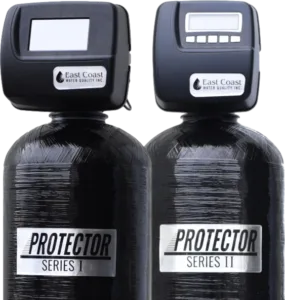 Whole-Home Treatment
Chesapeake Water Softeners
Improve water throughout the home while addressing hardness, scale, spotting and chlorine taste or odor.
- Treats showers, sinks, laundry and appliances
- Helps reduce hardness-related buildup
- Professional local installation
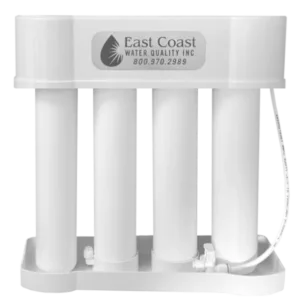 Drinking-Water Treatment
Chesapeake Reverse Osmosis
Get highly filtered drinking and cooking water from a dedicated faucet, with refrigerator connection available where practical.
- Targets a broad range of dissolved contaminants
- Improves drinking-water taste and clarity
- Alternative to bottled water
 Targeted Filtration
Chesapeake PFAS Water Filters
Compare specialized whole-home PFAS treatment with reverse osmosis drinking-water protection.
- Whole-home and point-of-use options
- Designed for targeted contaminant reduction
- System choice based on treatment goal
Well Water Requires Property-Specific Testing
Private-well conditions can vary from one Chesapeake property to the next. In the local video above, Chris notes that some well-water areas around Chesapeake, including Hickory and areas toward the North Carolina line, can experience very high iron. Sulfur, tannins, hardness and pH can also affect the treatment approach.
Because iron type and concentration matter, well-water treatment should be selected from property-specific testing rather than a one-size-fits-all recommendation.
Municipal water and well water should not share one generic recommendation.
City-water treatment usually focuses on hardness, chlorine, taste and dissolved contaminants. Well-water treatment should be selected from property-specific test results.
Local Installation With Long-Term Support
Chesapeake Service
Local consultation, installation and service throughout Chesapeake and the surrounding Hampton Roads area.
Professional Installation
Insured work performed under a Master Plumbing license for proper system placement and connection.
Ongoing Maintenance
Available service for reverse osmosis filters, sanitation and continued system performance.
What Local Homeowners Say
★★★★★“We have noticed a difference since getting this water system, our skin is softer, the dishes are cleaner, and we had a great experience with our technician.”
Mara & Byron — Chesapeake
★★★★★“Everything was handled well and was communicated during the whole process. Installation took less than a day. Everyone was friendly as well.”
Stacy — Chesapeake
★★★★★“All three groups of technicians that came out have been very pleasant and kind. Would definitely recommend to friends and family!”
Siobhan — Chesapeake
Chesapeake Water Treatment Questions
What is the best water treatment system for a Chesapeake home?
It depends on the problem. A whole-home conditioner addresses hardness and selected aesthetic concerns throughout the house. Reverse osmosis provides highly filtered drinking water. Specialized PFAS or well-water treatment should be selected for the specific contaminant or condition.
Do Chesapeake homes need water softeners?
Not every home has the same treatment goal. A home water evaluation can help identify hardness, scale, spotting or chlorine concerns and determine whether whole-home conditioning is appropriate.
Does a water softener remove PFAS?
A standard water softener is designed primarily for hardness minerals. PFAS concerns are better addressed with appropriately certified or tested PFAS filtration and reverse osmosis options.
What does a Chesapeake free water test include?
Our free in-home water test includes testing your tap water, refrigerator water, bottled water and other household water sources, while evaluating hardness, chlorine, pH and other common water conditions. It is a comprehensive in-home evaluation, but it is not a certified laboratory analysis for contaminants such as PFAS.
Can reverse osmosis connect to a refrigerator?
In many homes, yes. A refrigerator line may be connected when the location and plumbing make it practical.
Do you treat private well water in Chesapeake?
Yes. Chesapeake has private-well areas where iron, sulfur, tannins, hardness and pH can vary significantly by property. Treatment recommendations should be based on the water conditions and testing appropriate to that home.
Find the Right Water Treatment System for Your Chesapeake Home
Schedule a local water evaluation or explore the Chesapeake guide that matches your water concern.
Virginia:
Virginia Beach, Norfolk, Chesapeake, Newport News, Hampton, Portsmouth, Suffolk, Williamsburg, Smithfield, Gloucester, Yorktown, Poquoson, Isle of Wight, Carrollton, Seaford, Grafton, Franklin, Emporia, Cape Charles, Courtland, Wakefield, Windsor, Naval Air Station Oceana, Naval Station Norfolk, Langley Air Force Base, Fort Eustis, Fort Monroe
North Carolina:
Raleigh, Durham, Fayetteville, Wilmington, Apex, Burlington, Wake Forest, Garner, Greenville, Jacksonville, Goldsboro, New Bern, Clayton, Kinston, Elizabeth City, Havelock, Hope Mills, Southern Pines, Pinehurst, Laurinburg, Lumberton, Henderson, Tarboro, Morehead City, Washington, Oak Island, Kill Devil Hills, Carolina Beach, Moyock, Shallotte, Williamston, Hampstead, Beaufort, Surf City, Whiteville, Newport, Ahoskie, Edenton, Swansboro, Plymouth, Emerald Isle, Kitty Hawk, Nags Head, Windsor, Sneads Ferry, Hubert, Hertford, Rocky Point, Manteo, Atlantic Beach, Camden, Castle Hayne, Bayboro, Maysville, Riegelwood, Creswell, Vanceboro, Oriental, Roper, Aulander, Rich Square, Currituck, Winton, Corolla, Camp Lejeune
 Hampton Roads VA / Northeast NC
3400 Airline Boulevard, Portsmouth VA 23701
757-966-7600
 Jacksonville NC / Morehead City NC
2582 NC-24, Newport NC 28570
252-777-5151

Wilmington NC / Leland NC
1026 Appleton Way NE #130, Leland, NC 28541
910-807-2300

Raleigh-Durham NC / Garner NC
313F Highway 70 East, Garner, NC 27529
919-238-9900