
East Coast Water Quality · Clayton, NC
Water treatment
in Clayton, NC.
Water softeners, reverse osmosis and whole-home filtration in Clayton—matched to your water, your household and what you want to improve.
Serving Clayton from our Raleigh–Durham / Garner office.
Your local water
Clayton water: check the system, not just the ZIP code.
Clayton’s main system and Clayton North/Riverwood have separate water reports. Both 2025 reports identify Neuse River surface water purchased from Johnston County West and report no drinking-water violations for the year. Your utility bill helps identify which report applies.
Town of Clayton
Main town system · NC 03-51-020
Read the 2025 water report (PDF) ↗Clayton North / Riverwood
North system · NC 40-51-019
Read the 2025 North report (PDF) ↗| 2025 result | Clayton | North / Riverwood | Standard / context |
|---|---|---|---|
| Total trihalomethanes (TTHM) | 47 ppb | 52 ppb | 80 ppb |
| Haloacetic acids (HAA5) | 37 ppb | 30.49 ppb | 60 ppb |
| Chlorine | 0.57 ppm | 0.35 ppm | 4 ppm disinfectant limit |
| Chloramines | 1.95 ppm | 1.34 ppm | 4 ppm disinfectant limit |
| Lead · 90th percentile | 0 ppb · 2023 samples | 0 ppb · 2024 samples | Neither system reported sites above the report’s 15 ppb action level |
| pH | 8.08 | 7.32 | Water characteristic; not a contaminant concentration |
Both reports state no drinking-water violations for 2025. ppb = parts per billion; ppm = parts per million. See the PDFs for ranges and definitions. Find your report and water-system map ↗
Taste and scale need different answers.
The reports identify disinfectant residuals. If taste or odor bothers you, discuss carbon filtration suited to chlorine or chloramines. Neither town report gives a hardness result, so test at home before selecting a softener.
A system result is not your faucet result.
The lead figures are 90th-percentile results, not proof that every tap is lead-free. Household plumbing matters. A specific lead concern needs appropriate sampling and laboratory testing.
A different benchmark
What EWG reports for Clayton
EWG’s Clayton listing (NC0351020) identifies 15 contaminants above its health guidelines in its 2014–2024 dataset. One listed example is haloacetic acids (HAA5): 24.8 ppb, compared with EWG’s 0.1 ppb guideline and the 60 ppb legal limit.
HAA5 and total trihalomethanes are disinfection byproducts tracked in water reporting. EWG’s historical figures and the town’s 2025 results cover different periods and should not be treated as a year-to-year trend.
EWG guidelines are not enforceable limits. These figures do not establish a current violation, describe every household, or apply automatically to Clayton North/Riverwood. Read Clayton’s EWG listing ↗
Find the right fit
One home. Different water-treatment goals.
Start with what you want to improve. A drinking-water system and a whole-home system do different jobs.
| Your goal | System to consider | What to know |
|---|---|---|
| Better drinking & cooking water | Membrane filtration at a dedicated faucet; optional refrigerator connection where practical. | |
| Less scale & improved water throughout the home | Softening for measured hardness, with carbon treatment selected for chlorine or chloramine concerns. | |
| Targeted PFAS or lead reduction | Whole-home filtration for specified contaminants. Match the exact model’s documented performance to your concern. | |
| Iron staining or sulfur odor on a well | Oxidation-based treatment for suitable well-water conditions. Acidity, tannins and sediment may need separate treatment. | |
| Reverse osmosis throughout the home | Custom membrane treatment with storage, a delivery pump and final UV. Requires space and property-specific design. |
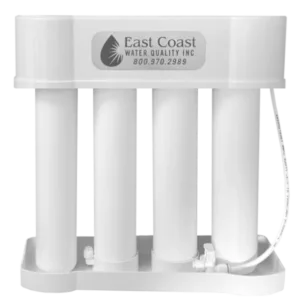
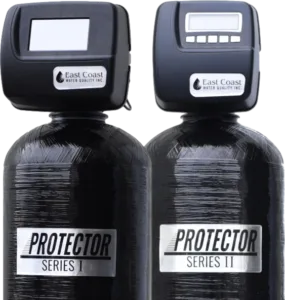


Performance depends on system configuration, incoming water and maintenance. A basic softener does not replace targeted PFAS filtration. Whole-home RO is not automatically necessary for Clayton municipal water.
A practical next step
See what’s happening at your tap.
Our free in-home evaluation helps you understand common water conditions and compare treatment options without choosing equipment first.
- Discuss taste, odor, spots, scale or staining.
- Evaluate hardness and common household water concerns.
- Compare tap, refrigerator-filtered or bottled water.
- Review your results and installation options.
Know what the free test covers. This is an in-home treatment evaluation, not certified laboratory testing for PFAS, lead, bacteria or other health-related contaminants. Those concerns require appropriate laboratory analysis.
A few questions before you book
Does every Clayton home need a water softener?
No. Check hardness at your home first. If taste is the main concern, filtration may be more relevant than softening. We match treatment to measured conditions and your goals.
What if I have a private well or a different water provider?
Use your own provider’s report or property-specific well testing. Clayton’s municipal results do not describe private wells or every home with a Clayton mailing address. Tell us your source when you book.
Should I choose under-sink RO or the Protector 2400?
Under-sink RO is usually the starting point for drinking and cooking water. The Protector 2400 serves connected fixtures throughout the home and needs a more extensive design, including storage, pumping and any required pretreatment.
Let’s find the right water solution for your Clayton home.
Tell us your water source and what you’d like to improve. We’ll help you take the next step.
Virginia:
Virginia Beach, Norfolk, Chesapeake, Newport News, Hampton, Portsmouth, Suffolk, Williamsburg, Smithfield, Gloucester, Yorktown, Poquoson, Isle of Wight, Carrollton, Seaford, Grafton, Franklin, Emporia, Cape Charles, Courtland, Wakefield, Windsor, Naval Air Station Oceana, Naval Station Norfolk, Langley Air Force Base, Fort Eustis, Fort Monroe
North Carolina:
Raleigh, Durham, Fayetteville, Wilmington, Apex, Burlington, Wake Forest, Garner, Greenville, Jacksonville, Goldsboro, New Bern, Clayton, Kinston, Elizabeth City, Havelock, Hope Mills, Southern Pines, Pinehurst, Laurinburg, Lumberton, Henderson, Tarboro, Morehead City, Washington, Oak Island, Kill Devil Hills, Carolina Beach, Moyock, Shallotte, Williamston, Hampstead, Beaufort, Surf City, Whiteville, Newport, Ahoskie, Edenton, Swansboro, Plymouth, Emerald Isle, Kitty Hawk, Nags Head, Windsor, Sneads Ferry, Hubert, Hertford, Rocky Point, Manteo, Atlantic Beach, Camden, Castle Hayne, Bayboro, Maysville, Riegelwood, Creswell, Vanceboro, Oriental, Roper, Aulander, Rich Square, Currituck, Winton, Corolla, Camp Lejeune
 Hampton Roads VA / Northeast NC
3400 Airline Boulevard, Portsmouth VA 23701
757-966-7600
 Jacksonville NC / Morehead City NC
2582 NC-24, Newport NC 28570
252-777-5151

Wilmington NC / Leland NC
1026 Appleton Way NE #130, Leland, NC 28541
910-807-2300

Raleigh-Durham NC / Garner NC
313F Highway 70 East, Garner, NC 27529
919-238-9900