
East Coast Water Quality · Lumberton, NC
Water filtration & softeners for Lumberton homes.
Better-tasting drinking water, less scale or help with a private well? Connect your household’s needs with the right treatment—and understand what Lumberton’s water report actually tells you.
Professional installation and ongoing system service in North Carolina.
Lumberton’s water supply
The Lumber River is part of the story. So is groundwater.
The City of Lumberton blends Lumber River water with deep-well water. Its 2025 report says blending helps manage alkalinity and color before the water reaches customers. That makes the utility’s treated-water results more useful than assumptions based on the river’s appearance.
Check the supplier on your bill: a Lumberton mailing address alone does not identify your water system. The figures below apply to City of Lumberton, NC0378010, not every Robeson County utility or private well.
2025 drinking-water report
The latest annual report linked from the city’s water-treatment page when checked October 16, 2026.
Download the city’s 2025 report (Word document) ↗Visit the official report page ↗
What the report says about compliance
The city reports no violations during 2025 or compliance periods ending in 2025. That finding and the detected substances below can both be true.
See the dated PFAS findings ↓| Substance | Reported result | Context |
|---|---|---|
| Total trihalomethanes (TTHM) | 40 ppb Sample range: 7.3–60.4 ppb | Report’s MCL: 80 ppb No violation reported. |
| Haloacetic acids (HAA5) | 30 ppb Sample range: 3.75–34.5 ppb | Report’s MCL: 60 ppb No violation reported. |
| Chlorine residual | 0.90 ppm running annual average Range: 0.23–1.64 ppm | Report’s disinfectant limit: 4 ppm No violation reported. |
ppb = parts per billion; ppm = parts per million. MCL means maximum contaminant level. Chlorine has a separate disinfectant limit. Consult the full report for sampling and compliance definitions.
PFAS: read the sample date and units.
The city’s July 21, 2025 samples list PFOA at 5.7 ppt and PFOS at 6.9 ppt, converted from the report’s micrograms-per-liter values. Both were also detected in January; March entries are marked ND.
ND means below the method’s reporting limit—not a proven zero. These individual samples do not establish today’s concentration at your faucet or, by themselves, a compliance violation. If PFAS is your priority, discuss the exact system’s documented reduction claims and replacement schedule.
Chlorine taste and scale need different answers.
The report includes a chlorine residual, but it does not establish your home’s hardness. Discuss suitable filtration for taste concerns and measure hardness before deciding on a softener.
A city result cannot diagnose a private well.
Bring your own well analysis if you have one. Iron staining, sulfur odor and other concerns call for property-specific evaluation rather than a recommendation based on municipal samples.
Historical data, a different benchmark
What EWG adds to the Lumberton picture
EWG’s City of Lumberton listing summarizes historical monitoring. Selected figures displayed in its utility summary are below; they are not the city’s 2025 results.
| Substance | EWG utility summary | EWG health guideline |
|---|---|---|
| Total trihalomethanes | 32.4 ppb | 0.15 ppb |
| Chloroform | 24.7 ppb | 0.4 ppb |
| Bromodichloromethane | 6.71 ppb | 0.06 ppb |
EWG’s health guidelines are different from enforceable drinking-water limits. Exceeding an EWG guideline does not itself mean a legal violation. Chloroform and bromodichloromethane are members of the trihalomethane group, so do not add these rows together.
Choose by treatment goal
Start at the kitchen tap—or plan for the whole home.
Your water source, household demand and maintenance preferences help determine the right fit. These systems address different needs.
| Your goal | System to consider | What to know |
|---|---|---|
| Better drinking & cooking water | Membrane filtration at a dedicated faucet; optional refrigerator connection where practical. | |
| Less scale & improved water throughout the home | For confirmed hardness: compare softening capacity and maintenance. For chlorine taste, discuss the carbon stage and its rated service life. | |
| Targeted PFAS or lead reduction | Discuss the PFAS results in Lumberton’s report and match the chosen model’s documented reductions, capacity and replacement schedule to your goal. | |
| Iron staining or sulfur odor on a well | For a private well with confirmed iron or hydrogen sulfide concerns. Test the well itself; the city report does not describe its water. | |
| Reverse osmosis throughout the home | An option for broader treatment needs after assessment—not a default recommendation from a city report. Requires storage, pumping and property-specific design. |
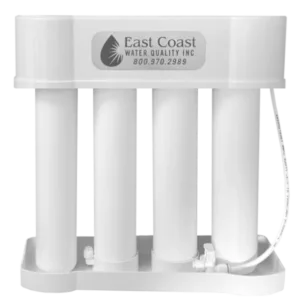
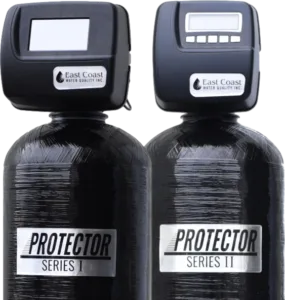


Performance depends on configuration, incoming water and maintenance. A basic softener is not a substitute for targeted PFAS filtration. Municipal PFAS detections alone do not mean a home needs whole-home reverse osmosis.
Your next step
Bring your water questions. We’ll help sort the options.
A free in-home evaluation connects the concerns you notice with practical treatment choices. Let us know your supplier—or that you use a well—when booking.
- Discuss taste, odor, staining, spots or scale.
- Evaluate hardness and common household water concerns.
- Review existing laboratory results and treatment goals.
- Discuss installation space, filter changes and ongoing service.
About the free test: this is an in-home treatment evaluation, not certified laboratory testing for PFAS, lead or bacteria. Specific health-related concerns require appropriate laboratory analysis.
Questions about water treatment in Lumberton
Why does EWG show different numbers from the city report?
The sources use different reporting periods and summaries. EWG also compares results with health guidelines that differ from regulatory limits. Compare the substance, sampling dates, units and benchmark before drawing a conclusion.
Does the report mean I need a softener?
No. The selected chlorine and disinfection-byproduct results do not measure hardness. Test hardness at your home first; drinking-water filtration and softening solve different problems.
Can a basic in-home test tell me my PFAS level?
No. A hardness or dissolved-solids reading cannot quantify PFAS. If you need a result for your own tap or well, arrange the appropriate laboratory analysis. You can bring those findings to your ECWQ evaluation.
Who can answer questions about the city’s lead testing?
The 2025 report lists the City of Lumberton Environmental Laboratory at 910-671-3858 for lead-testing questions. Its lead table uses 2023 samples; a utility-wide percentile does not establish the result at every home. For the latest report and utility contacts, use the official water-treatment page.
Make your next water-treatment decision an informed one.
Tell us where your Lumberton home gets its water and what you want to improve. Start with a free in-home evaluation.
Virginia:
Virginia Beach, Norfolk, Chesapeake, Newport News, Hampton, Portsmouth, Suffolk, Williamsburg, Smithfield, Gloucester, Yorktown, Poquoson, Isle of Wight, Carrollton, Seaford, Grafton, Franklin, Emporia, Cape Charles, Courtland, Wakefield, Windsor, Naval Air Station Oceana, Naval Station Norfolk, Langley Air Force Base, Fort Eustis, Fort Monroe
North Carolina:
Raleigh, Durham, Fayetteville, Wilmington, Apex, Burlington, Wake Forest, Garner, Greenville, Jacksonville, Goldsboro, New Bern, Clayton, Kinston, Elizabeth City, Havelock, Hope Mills, Southern Pines, Pinehurst, Laurinburg, Lumberton, Henderson, Tarboro, Morehead City, Washington, Oak Island, Kill Devil Hills, Carolina Beach, Moyock, Shallotte, Williamston, Hampstead, Beaufort, Surf City, Whiteville, Newport, Ahoskie, Edenton, Swansboro, Plymouth, Emerald Isle, Kitty Hawk, Nags Head, Windsor, Sneads Ferry, Hubert, Hertford, Rocky Point, Manteo, Atlantic Beach, Camden, Castle Hayne, Bayboro, Maysville, Riegelwood, Creswell, Vanceboro, Oriental, Roper, Aulander, Rich Square, Currituck, Winton, Corolla, Camp Lejeune
 Hampton Roads VA / Northeast NC
3400 Airline Boulevard, Portsmouth VA 23701
757-966-7600
 Jacksonville NC / Morehead City NC
2582 NC-24, Newport NC 28570
252-777-5151

Wilmington NC / Leland NC
1026 Appleton Way NE #130, Leland, NC 28541
910-807-2300

Raleigh-Durham NC / Garner NC
313F Highway 70 East, Garner, NC 27529
919-238-9900