
Durham NC Water Problems, Contaminants & Treatment Options
See what Durham's 2025 drinking-water report and EWG's separate health-guideline database show, how chloramines and disinfection byproducts fit into the picture, and which treatment approach may match the concern you want to address at home.
What Is Reported in Durham Drinking Water?
Durham's 2025 Annual Drinking Water Quality Report says the municipal system met all drinking-water quality standards for the year. EWG uses separate, non-enforceable health guidelines and a different data period, so its figures should not be read as regulatory violations.
Regulatory Results
Durham reports 100% compliance for 2025 and no violations covering January 1 through December 31, 2025.
EWG Health Guidelines
EWG lists nine contaminants above its selected health guidelines for the City of Durham utility. Those benchmarks are not the same as enforceable EPA or state drinking-water limits.
Durham's Public Supply
Lake Michie and Little River Reservoir are Durham's main surface-water sources. The 2025 report also notes purchased water from the Town of Cary during the year.
Use each source for the question it answers.
The City report is the primary source for current regulatory compliance and 2025 monitoring. EWG provides an additional health-guideline comparison using data that spans different years.
Contaminants Shown Above EWG Health Guidelines
EWG's City of Durham utility page currently lists nine contaminants above EWG-selected health guidelines. These are EWG benchmarks, not a statement that Durham violated EPA or North Carolina drinking-water standards.
Bromodichloromethane
Chloroform
Dichloroacetic acid
Haloacetic acids (HAA5)
Haloacetic acids (HAA9)
Perfluorooctane sulfonate (PFOS)
Perfluorooctanoic acid (PFOA)
Total trihalomethanes (TTHMs)
Trichloroacetic acid
About the numbers: EWG's utility page summarizes data from different reporting periods than Durham's 2025 Annual Drinking Water Quality Report. The two datasets should not be treated as one sampling event or used interchangeably.
Other Contaminants Listed for Durham
EWG also lists contaminants that were detected but not placed in its “exceed guidelines” group. Some have EWG health guidelines; others do not.
| Substance | EWG “This Utility” Value | EWG Guideline | Legal Limit Shown by EWG |
|---|---|---|---|
| Chlorate | 141 ppb | 210 ppb | No legal limit shown |
| Chromium (hexavalent) | 0.0177 ppb | 0.02 ppb | No legal limit shown |
| Dibromoacetic acid | 0.0125 ppb | 0.03 ppb | No legal limit shown |
| Dibromochloromethane | 0.134 ppb | 0.1 ppb | No legal limit shown |
| Fluoride | 0.397 ppm | No EWG health guideline | 4 ppm |
| Manganese | 0.782 ppb | 100 ppb | No legal limit shown |
| Monobromoacetic acid | 0.188 ppb | 25 ppb | No legal limit shown |
| Monochloroacetic acid | 1.81 ppb | 53 ppb | No legal limit shown |
| Perfluorobutane sulfonate (PFBS) | 3.98 ppt | 2,000 ppt | No legal limit shown |
| Perfluorobutanoic acid (PFBA) | 0.520 ppt | 1,000 ppt | No legal limit shown |
| Perfluorohexanoic acid (PFHxA) | 0.230 ppt | 1,000 ppt | No legal limit shown |
| Perfluoropentanoic acid (PFPeA) | 0.320 ppt | 1,000 ppt | No legal limit shown |
| Strontium | 0.0468 ppb | 1,500 ppb | No legal limit shown |
| Vanadium | 0.0281 ppb | 21 ppb | No legal limit shown |
Current Durham Water Results and Characteristics
Durham's latest official report provides the regulatory context for the municipal system and reports 100% compliance for 2025.
Chloramine Disinfection
The report lists a chloramine running annual average of 1.5 ppm, with a range of 0.01–3.0 ppm. Chlorine residuals are also reported.
Disinfection Byproducts
Durham reports a highest LRAA of 56 ppb for TTHM and 49 ppb for HAA5, below the respective MCLs of 80 and 60 ppb.
Lead & Copper
Lead was non-detect at the 90th percentile and copper was 0.105 ppm; zero sampled sites were above the applicable action levels.
PFAS Monitoring
The 2025 report lists PFOA, PFOS, PFBS and PFBA in its unregulated contaminant table, with four sampling dates during the year.
System-wide compliance does not describe every individual faucet.
Water can change as it moves through service lines and household plumbing. A city report is the right source for public-system monitoring, while a property-specific concern may require testing at the home.
Why Durham Tap Water Can Taste, Smell or Behave Differently at Home
Durham uses chloramines for disinfection and adds orthophosphate for corrosion control, sodium hydroxide for pH balance and fluoride for dental health. Household plumbing, water age and individual fixtures can also influence what you notice at the tap.
Disinfectant Taste or Odor
Some homeowners are more sensitive to disinfectant taste or odor even when the municipal water meets regulatory requirements.
Disinfection Byproducts
TTHMs and HAA5 are regulated byproducts that can form when disinfectants react with naturally occurring organic matter. Durham's 2025 compliance results were below their MCLs.
Plumbing Can Matter
Service-line and household plumbing materials can affect water at a particular faucet, especially for concerns such as lead that are influenced by plumbing.
PFAS and Lead Need Different Kinds of Context
PFAS Monitoring in Durham's 2025 Report
Durham's unregulated contaminant table reports four PFAS compounds from quarterly sampling in 2025.
- PFOA: 3.8 ppt average; range 2.8–5.7 ppt
- PFOS: 5.6 ppt average; range 4.6–7.2 ppt
- PFBS: 5.9 ppt average; range 3.1–7.7 ppt
- PFBA: 2.2 ppt average; range 2.0–3.5 ppt
Durham is also moving forward with a PFAS treatment-upgrade project that includes evaluation of powdered activated carbon.
Lead Can Be Property-Specific
Durham's 2025 lead and copper table reports lead as non-detect at the 90th percentile with zero sampled sites above the 15 ppb Action Level.
The City also explains that lead in drinking water is primarily associated with service lines and home plumbing materials. That means a system-wide result cannot determine the concentration at every faucet.
Homeowners concerned about lead at a specific tap should use appropriate sampling and laboratory analysis.
ECWQ's free in-home test is not certified contaminant testing.
Use appropriate laboratory analysis for PFAS, lead, bacteria, arsenic, nitrate or another contaminant that requires certified testing.
Which Durham Water Treatment System Addresses Which Problem?
No single system is the best choice for every water concern. The correct treatment depends on the substance, whether you want to treat one drinking-water faucet or the whole home, and the exact performance claims of the selected model.
Read this matrix as a treatment guide—not a blanket removal guarantee.
Actual reduction depends on system configuration, media, membrane performance, flow rate, maintenance, water chemistry and certification. Confirm claims against the exact product specifications for the system selected.
| Water Problem or Contaminant | Reverse Osmosis | Whole-Home Conditioner / Carbon | PFAS / Lead Series | Iron / Sulfur or Well System | Best Page to Visit |
|---|---|---|---|---|---|
| General drinking-water concerns | |||||
| Dissolved drinking-water contaminants | Often a strong point-of-use approach when the exact system is rated for the target | Not the primary purpose of standard conditioning | Depends on exact media and documented claim | Not a standard iron/sulfur treatment goal | Reverse Osmosis → |
| Disinfectant taste or odor | Carbon stages can improve drinking-water taste and odor | Appropriate carbon can address whole-home disinfectant taste or odor | Depends on system configuration | Not the primary purpose | Water Conditioners → |
| Hardness, scale and spotting | Treats point-of-use drinking water, not whole-home hardness | Primary whole-home hardness treatment | Not the primary purpose | May be paired with well treatment when hardness is also present | Water Conditioners → |
| Disinfection chemicals and byproducts | |||||
| Total trihalomethanes (TTHMs) | RO plus carbon can be a strong drinking-water approach | Activated or catalytic carbon may reduce many volatile byproducts | Depends on exact carbon/media configuration | Not the primary purpose | Reverse Osmosis → |
| Haloacetic acids (HAA5) | RO is generally the stronger point-of-use option when appropriately rated | Carbon performance varies by compound, contact time and configuration | Depends on exact system design | Not the primary purpose | Reverse Osmosis → |
| EWG-listed contaminants above health guidelines | |||||
| Bromodichloromethane | RO plus carbon can be considered for point-of-use reduction | Activated carbon can reduce many trihalomethanes; performance depends on system design | Not the primary PFAS/lead target | Not the primary purpose | Reverse Osmosis → |
| Chloroform | RO plus carbon can be considered for point-of-use reduction | Activated carbon can reduce chloroform and other trihalomethanes | Not the primary PFAS/lead target | Not the primary purpose | Reverse Osmosis → |
| Chromium (hexavalent) | RO can be considered when the exact system is rated for chromium reduction | Not the primary purpose of standard conditioning | Depends on exact media and documented claim | Not a standard iron/sulfur claim | Reverse Osmosis → |
| Dibromoacetic acid | RO can be considered for point-of-use reduction when appropriately rated | Carbon performance varies | Not the primary PFAS/lead target | Not the primary purpose | Reverse Osmosis → |
| Dibromochloromethane | RO plus carbon can be considered for point-of-use reduction | Activated carbon can reduce many trihalomethanes | Not the primary PFAS/lead target | Not the primary purpose | Reverse Osmosis → |
| Dichloroacetic acid | RO can be considered for point-of-use reduction when appropriately rated | Carbon performance varies | Not the primary PFAS/lead target | Not the primary purpose | Reverse Osmosis → |
| Haloacetic acids (HAA9) | RO can be considered for point-of-use reduction when appropriately rated | Carbon performance varies by compound and contact time | Not the primary PFAS/lead target | Not the primary purpose | Reverse Osmosis → |
| Radium, combined (-226 & -228) | RO may reduce radium when the exact system is appropriately rated and maintained | A standard conditioner should not be presented as a radium treatment without a documented claim | Not the primary PFAS/lead target | Not a standard iron/sulfur claim | Reverse Osmosis → |
| Trichloroacetic acid | RO can be considered for point-of-use reduction when appropriately rated | Carbon performance varies | Not the primary PFAS/lead target | Not the primary purpose | Reverse Osmosis → |
| PFAS and lead concerns | |||||
| PFAS, including PFOA and PFOS | Strong point-of-use option when certified or tested for specified PFAS | Carbon can reduce some PFAS, but performance and breakthrough vary | Primary whole-home PFAS treatment category | Not the primary purpose | |
| Lead | Point-of-use RO can reduce lead when rated for it | A standard conditioner is not a lead filter | Primary whole-home lead filtration category | Not the primary purpose | |


Start With Where You Want the Water Treated
A kitchen drinking-water system, whole-home conditioner and targeted PFAS filter solve different problems.
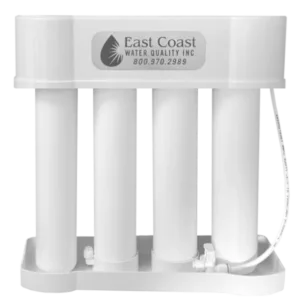
Reverse Osmosis
Point-of-use filtration for drinking, cooking, coffee and ice, with performance depending on the exact system and target contaminant.
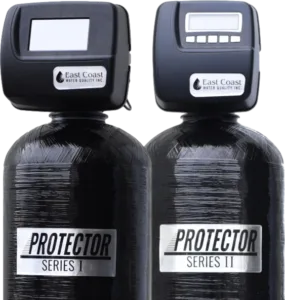
Explore Durham Reverse Osmosis →Water Conditioners
Whole-home treatment for hardness and selected taste or odor goals, based on the equipment and media selected.
Explore Durham Water Conditioners →PFAS Water Filters
Targeted whole-home and point-of-use options for homeowners specifically concerned about PFAS.
Explore Durham PFAS Filters →Do Not Apply Durham City-Water Results to a Private Well
The Durham municipal Durham Water data on this page describes the municipal surface-water supply. A private well can have completely different conditions and needs property-specific testing.
Municipal Water
Use Durham Durham Water reporting to understand the public supply, then consider household plumbing and your treatment goals.
Private-Well Water
Iron, sulfur odor, sediment, hardness, pH, bacteria and other well conditions should be evaluated from the actual property's water rather than inferred from city-water data.
Use the Right Test for the Water Question
Free In-Home Water Test
Useful for evaluating common household water conditions and discussing treatment options. It is not a certified laboratory contaminant test.
Laboratory Contaminant Testing
Use appropriate laboratory analysis when you need a property-specific result for PFAS, lead, bacteria or another contaminant requiring certified testing.
Private-Well Testing
Well-water treatment should begin with the actual well's chemistry and microbiological needs rather than municipal water assumptions.
Durham Water Problems FAQs
Does Durham's 2025 water report show any violations?
No. The City reports 100% compliance with drinking-water quality standards for 2025 and says it received no violations covering the report year's compliance period.
Why does EWG show contaminants above health guidelines if Durham met legal standards?
EWG health guidelines are separate, non-enforceable benchmarks and may be lower than federal or state legal limits. EWG also uses a different data period than Durham's current annual report.
Does Durham use chlorine or chloramine?
Durham uses chloramination for drinking-water disinfection. The City's treatment information says chlorine and ammonia react to form chloramine, and the 2025 report includes residual monitoring for chloramines and chlorine.
Were PFAS detected in Durham water?
Yes. Durham's 2025 report lists PFOA, PFOS, PFBS and PFBA in its unregulated contaminant table. The City's PFAS program also publishes ongoing monitoring and treatment-planning information.
What did Durham report for lead?
The 2025 report lists lead as non-detect at the 90th percentile, with zero sampled sites above the 15 ppb Action Level. Because lead can come from service lines and home plumbing, testing a specific faucet is the appropriate way to evaluate an individual property.
Can reverse osmosis help with drinking-water concerns?
Reverse osmosis can be a strong point-of-use approach for many dissolved drinking-water contaminants when the exact system is appropriately configured and rated for the target. Review the Durham Reverse Osmosis page for system-specific guidance.
Should I use Durham's city-water results for a private well?
No. Durham's municipal report describes the public surface-water system. A private well can have completely different conditions and should be evaluated from the actual property's water.
What does ECWQ's free water test cover?
The free in-home evaluation is intended for common household water conditions and treatment planning. It is not a substitute for certified laboratory testing for PFAS, lead, bacteria, arsenic, nitrate or other contaminants that require laboratory analysis.
Move From Durham Water Data to Your Home's Water
If taste, odor, drinking-water filtration or another household concern is driving your search, start with an in-home evaluation and choose treatment around the actual goal—not a one-size-fits-all system.
Virginia:
Virginia Beach, Norfolk, Chesapeake, Newport News, Hampton, Portsmouth, Suffolk, Williamsburg, Smithfield, Gloucester, Yorktown, Poquoson, Isle of Wight, Carrollton, Seaford, Grafton, Franklin, Emporia, Cape Charles, Courtland, Wakefield, Windsor, Naval Air Station Oceana, Naval Station Norfolk, Langley Air Force Base, Fort Eustis, Fort Monroe
North Carolina:
Raleigh, Durham, Fayetteville, Wilmington, Apex, Burlington, Wake Forest, Garner, Greenville, Jacksonville, Goldsboro, New Bern, Clayton, Kinston, Elizabeth City, Havelock, Hope Mills, Southern Pines, Pinehurst, Laurinburg, Lumberton, Henderson, Tarboro, Morehead City, Washington, Oak Island, Kill Devil Hills, Carolina Beach, Moyock, Shallotte, Williamston, Hampstead, Beaufort, Surf City, Whiteville, Newport, Ahoskie, Edenton, Swansboro, Plymouth, Emerald Isle, Kitty Hawk, Nags Head, Windsor, Sneads Ferry, Hubert, Hertford, Rocky Point, Manteo, Atlantic Beach, Camden, Castle Hayne, Bayboro, Maysville, Riegelwood, Creswell, Vanceboro, Oriental, Roper, Aulander, Rich Square, Currituck, Winton, Corolla, Camp Lejeune
 Hampton Roads VA / Northeast NC
3400 Airline Boulevard, Portsmouth VA 23701
757-966-7600
 Jacksonville NC / Morehead City NC
2582 NC-24, Newport NC 28570
252-777-5151

Wilmington NC / Leland NC
1026 Appleton Way NE #130, Leland, NC 28541
910-807-2300

Raleigh-Durham NC / Garner NC
313F Highway 70 East, Garner, NC 27529
919-238-9900