
Virginia Beach Water Problems, Contaminants & Treatment Options
Explore substances reported in Virginia Beach, VA drinking water, compare EPA limits with Environmental Working Group health guidelines, and see which home water-treatment systems are designed for different concerns.
Is Virginia Beach Tap Water Safe—and Which System Should You Consider?
Virginia Beach's 2025 Water Quality Report says the municipal supply met the federal and state standards covered by the report. EWG applies separate, non-enforceable health guidelines and lists several detected substances above those lower benchmarks.
For drinking and cooking water: start with reverse osmosis when the goal is broad reduction of dissolved contaminants at a dedicated faucet.
For hardness, scale or disinfectant taste throughout the house: start with a whole-home softener or conditioner configured for the problem.
For a specific PFAS or lead concern: compare targeted PFAS/lead filtration with reverse osmosis and confirm the exact model's performance claims.
For a private well: choose treatment only after property-specific testing for iron, sulfur, pH, tannins, sediment and other well conditions.
Not Sure What These Water Results Mean for Your Home?
City and EWG data describe the public water system, but your plumbing, water source and treatment goals are specific to your home. Schedule a thorough in-home water evaluation and have a local technician test your household water sources, explain the findings and recommend next steps.
The in-home evaluation is not an extensive certified laboratory analysis. PFAS, lead, arsenic, nitrate, bacteria and similar contaminants require appropriate laboratory testing.
Start With Where You Want the Water Treated
The most useful first decision is whether you want highly filtered water at the kitchen sink, treatment throughout the home, targeted PFAS and lead filtration, or a property-specific private-well solution.
Drinking and Cooking Water
Choose reverse osmosis when the main goal is reducing a broad range of dissolved contaminants at a dedicated faucet and, where practical, a refrigerator line.
Explore Virginia Beach Reverse Osmosis →Whole-Home Hardness and Carbon Treatment
Choose whole-home treatment when the main concerns are hardness, scale, spotting, chlorine or chloramine taste and odor throughout the house.
Explore Virginia Beach Water Softeners →Targeted PFAS and Lead Filtration
Choose the PFAS / Lead category when the goal is specialized whole-home treatment for specified PFAS and lead concerns, often paired with RO drinking water.
Explore Virginia Beach PFAS Filters →Private-Well Conditions
Choose well-water treatment for iron, sulfur odor, low pH, tannins, sediment or other property-specific conditions identified through appropriate testing.
Explore Virginia Beach Well Water Treatment →Does Virginia Beach Have Hard Water?
See how Virginia Beach city-water hardness compares with truly soft and extremely hard water, the household signs homeowners commonly notice, and why chlorine and chloramines can also affect the way municipal water feels and performs.
Read Transcript
Do I have hard water in Virginia Beach?
That term, hard water, really ranges so much with who's the one experiencing the water. If you've come from so many different areas that have what we call crazy hard water, and you're familiar with grains per gallon, the way they measure hardness in water, we hear of places on the West Coast that have 40 grains per gallon. That's not even imaginable. I've been in the industry for 20 years and I've never seen 40 grains in my life.
However, you'll have people that have been on well water and had really soft water, and they can move into Virginia Beach where you have typically anywhere from 4 to 6 grains per gallon, which is usually about what we're testing at in most places in Virginia Beach. This is city water that we're talking about here. They've had soft water, and they think their water is atrocious. They think it is super hard.
For me, the way I look at hardness in water, once you have soft water—zero grains per gallon—any hardness is more hardness than I would like to have coming through my appliances and all the many benefits that you get from soft water. So, if I had one grain or even two grains per gallon, that's 200% more hardness than I would like to have in my water. Obviously, when you're getting to 4 to 6 grains per gallon, that's 400 to 600% more hardness than what I want.
But does that mean that you have the hardest water on the planet? No. Do you still have spots all over your glasses? Absolutely. Do you still get soap scum buildup in the tubs? Sure. Do you still have lots of wasted money in detergents and cleaners? When you get in the shower, you can really tell real quick when you put that shampoo together how fast the suds go away. Yes, you're still going to experience everything that someone with crazy hard water would experience, just at a lower level, and a 100% different experience than someone who has soft water. Then we get into eczema, skin, and things like that.
Strictly speaking on the hardness in the water, Virginia Beach doesn't have the hardest water. There are still well water areas that have extremely hard water, but you're kind of right in the middle with the Virginia Beach water. I can't sit here and tell you that you don't have hard water when you know what you're experiencing and why you're probably watching this video in the first place.
Yes, I would rather have zero grains per gallon.
Check out some of our other videos, too. There are lots of other benefits when you're looking into these whole-home systems. When you're on city water, if you're not from this area—we have a lot of military families and people that move into this area—check out our videos on chlorine and chloramines in your water. That's a big one that may be giving you some of the experience that you may be looking at as just hard water, but you may actually be experiencing the effects of those disinfectants as well, and not just the hard water.
Thank you. Hopefully, this helps.
What You'll Learn in This Video
- How hard the water is in most areas of Virginia Beach.
- Why hard water can feel different depending on what you're used to.
- The common signs of hard water in your home.
- Why even moderately hard water can affect appliances and cleaning.
- Why many Virginia Beach homeowners still benefit from soft water.
- How chlorine and chloramines may also affect your water experience.
What Is Reported in Virginia Beach Drinking Water?
Virginia Beach's 2025 Consumer Confidence Report summarizes testing performed during 2024. It states that the municipal supply met the federal and state standards covered by the report. Separate EWG data applies independent health-based benchmarks that can be far lower than enforceable legal limits.
Regulatory Standards
EPA maximum contaminant levels are enforceable standards for public water systems. The official city report says the substances listed in its compliance tables met applicable standards.
Health Guidelines
EWG guidelines are non-enforceable health benchmarks. A substance can meet an EPA legal limit while still appearing above an EWG guideline.
Your Home
Municipal reporting does not describe every service line, plumbing fixture, private well or household preference involving taste, odor, hardness and filtration.
Meeting a legal standard and exceeding an EWG guideline are not contradictory.
EPA limits and EWG guidelines serve different purposes. EWG is not a regulatory agency, and its guidelines are not legal limits. Use the official city report for compliance information and EWG data as additional health-guideline context.
Contaminants Shown Above EWG Health Guidelines
This combined list brings together the contaminants shown above EWG health guidelines in both Virginia Beach EWG datasets used for this page. Duplicate contaminant names are shown once. EWG health guidelines are non-enforceable benchmarks and may use different reporting periods than the city's annual water-quality report.
View all contaminants listed above EWG health guidelines
Other Contaminants Detected in Virginia Beach Water
This combined list brings together the other contaminants detected in both Virginia Beach EWG datasets used for this page. Duplicate contaminant names are shown once. Most values are shown beneath the listed EWG guideline or legal limit; any card marked with the red treatment remains visually separated for additional context.
View all other contaminants detected in the EWG data
Contaminants and Water Characteristics in the Official Virginia Beach Report
The official report includes regulated substances, disinfectants, turbidity, lead and copper, secondary and unregulated substances, and general water characteristics.
View the complete official Virginia Beach report table
| Substance or Measure | Official Report Result | Standard or Context | Why Homeowners May Care |
|---|---|---|---|
| Regulated substances and treatment measures | |||
| Barium | Average 0.03 ppm; high 0.04 ppm | MCL 2 ppm — Yes | Dissolved mineral; point-of-use treatment may be considered for additional reduction. |
| Fluoride | Average 0.3 ppm; high 0.41 ppm | MCL 4 ppm — Yes | Some homeowners choose RO when they want lower fluoride in drinking water. |
| Haloacetic acids (HAA5) | Average 28 ppb; reported range 10–47 ppb | MCL 60 ppb — Yes | Disinfection byproducts; carbon and RO treatment choices depend on treatment location and goal. |
| Nitrate as nitrogen | Average 0.12 ppm; high 0.27 ppm | MCL 10 ppm — Yes | RO is a common drinking-water treatment approach for nitrate reduction. |
| Total trihalomethanes | Average 36 ppb; reported range 16–58 ppb | MCL 80 ppb — Yes | Disinfection byproducts; carbon filtration and RO may be considered. |
| Total organic carbon | 56% removal; 45% required | Treatment technique — Yes | Organic material can contribute to disinfection-byproduct formation. |
| Chloramine | Highest detected 3.03 ppm | MRDL 4 ppm — Yes | Can affect taste and odor; catalytic carbon is commonly used for chloramine reduction. |
| Turbidity | Highest detected 0.11 NTU | Meets treatment requirement | Measure of cloudiness and filtration effectiveness. |
| Lead and copper | |||
| Lead | 90% of samples ≤1 ppb; range ND–4 ppb; 0 sites over action level | Action level 15 ppb — Yes | Lead can originate from service lines and household plumbing, so one home's result can differ from the system report. |
| Copper | 90% of samples = 0.124 ppm; range ND–0.236 ppm | Action level 1.3 ppm — Yes | Can originate from corrosion of household plumbing. |
| Secondary, unregulated and general water characteristics | |||
| Aluminum | Average 0.02 ppm | Secondary range 0.05–0.20 ppm | May come from natural deposits or treatment chemicals. |
| Boron | Average ND; high 0.05 ppm | No secondary standard listed | Occurs naturally and can have manmade sources. |
| Chloride | Average 16 ppm | Secondary standard 250 ppm | Can affect taste at higher levels. |
| Iron | Average ND; high 0.03 ppm | Secondary standard 0.3 ppm | More commonly a private-well concern involving staining and metallic taste. |
| Manganese | Average ND; high 0.006 ppm | Secondary standard 0.05 ppm | Can contribute to dark staining at elevated levels. |
| Nickel | Average ND; high 0.003 ppm | No secondary standard listed | Can be associated with plumbing materials. |
| pH | Average 7.7; range 7.3–8.3 | Secondary range 6.5–8.5 | pH affects corrosion, taste and treatment selection. |
| Sodium | Average 14 ppm | No secondary standard listed | RO can reduce dissolved sodium at the drinking-water faucet. |
| Sulfate | Average 33 ppm | Secondary standard 250 ppm | Can affect taste at elevated levels. |
| Total dissolved solids | Average 110 ppm | Secondary standard 500 ppm | RO is designed to reduce a broad range of dissolved solids at the drinking faucet. |
| Zinc | Average 0.2 ppm | Secondary standard 5 ppm | Can come from natural sources and treatment chemicals. |
| Alkalinity | Average 35 ppm | Additional information | Influences buffering and pH stability. |
| Ammonia | Average 0.1 ppm | Additional information | Associated with chloramination and water chemistry. |
| Hardness | Average 55 ppm | About 3.2 grains per gallon | The city classifies this between soft and slightly hard; household treatment is preference- and symptom-driven. |
| Silica | Average 7 ppm | Additional information | Dissolved mineral that may contribute to spotting under some conditions. |
The official report says Virginia Beach met the applicable federal and state standards covered by its tables. EWG uses separate, non-enforceable health guidelines, and its database values may represent different testing and reporting periods than the city's annual report.
Why Can Virginia Beach Water Taste or Smell Different From Home to Home?
A city water report describes the public supply, but the water you experience at the faucet is also influenced by disinfectants, hardness and the plumbing inside the property.
Chloramine and Disinfectant Taste
The official Virginia Beach report lists chloramine in the municipal supply. Some homeowners notice disinfectant taste or odor and choose catalytic-carbon treatment when they want to reduce it throughout the home.
Hardness, Scale and Spotting
Even moderate hardness can affect soap performance, spotting and mineral buildup. A whole-home water softener or conditioner is the primary treatment category when hardness is the concern.
Household Plumbing
Service lines, fixtures and household plumbing can change the final water at an individual faucet. That is why city-wide reporting cannot answer every property-specific question.
PFAS and Lead Require Different Context
The 2025 city report discusses both PFAS and lead, but the source and treatment decisions are not the same.
PFAS Monitoring in the City Report
Virginia Beach Public Utilities states that it tested for 29 PFAS substances and lithium under EPA's UCMR 5 monitoring during 2024. The report says no PFAS or other UCMR 5 contaminants were detected in those water samples.
A non-detect result means the laboratory did not report the substance above the applicable reporting or detection threshold for that sample. It does not mean every possible PFAS compound was tested or that every household faucet was individually sampled.
Lead Can Be Property-Specific
The official report says lead in drinking water is primarily associated with service lines and household plumbing materials. The city reported that 90% of samples were at or below 1 ppb, with no sampled sites exceeding the 15 ppb action level.
Because plumbing materials vary by property, a system-wide report cannot determine the lead concentration at every individual faucet. Specialized testing may be appropriate when a homeowner has a specific lead concern.
Do not use the free in-home test as a substitute for certified laboratory testing.
ECWQ's free home water evaluation is useful for hardness and common aesthetic concerns. PFAS, lead and many other contaminants require appropriate sample collection and laboratory analysis.
Which Virginia Beach Water Treatment System Addresses Which Problem?
No single system is the best choice for every water concern. The correct treatment depends on the substance, whether you want to treat one drinking-water faucet or the whole home, and the exact performance claims of the selected model.
Read this matrix as a treatment guide—not a blanket removal guarantee.
Actual reduction depends on system configuration, media, membrane performance, flow rate, maintenance, water chemistry and certification. Confirm all claims against the exact product specifications before publishing.
| Water Problem or Contaminant | Reverse Osmosis | Whole-Home Conditioner / Carbon | PFAS / Lead Series | Iron / Sulfur or Well System | Best Page to Visit |
|---|---|---|---|---|---|
| Dissolved drinking-water contaminants | |||||
| Arsenic | Strong point-of-use option when the membrane is rated for arsenic reduction | Not the primary purpose | Only when specifically rated for the arsenic form present | Not a standard iron/sulfur claim | Reverse Osmosis → |
| Fluoride | Common RO treatment target | Standard softening/carbon does not target fluoride | Not the primary whole-home PFAS/lead claim | Not applicable | Reverse Osmosis → |
| Nitrate / Nitrite | Common RO treatment target | Not removed by a standard softener or carbon filter | Not the primary purpose | Specialized well treatment may be required | Reverse Osmosis → |
| Total dissolved solids and sodium | Designed to reduce a broad range of dissolved solids | A softener exchanges hardness minerals and can add sodium | Not the primary purpose | Not the primary purpose | Reverse Osmosis → |
| Hexavalent chromium, barium, selenium, cadmium, antimony and similar dissolved metals | RO may reduce many dissolved inorganic contaminants when rated for them | Not the primary purpose | Performance depends on exact media and certification | Not a standard iron/sulfur claim | Reverse Osmosis → |
| Disinfection chemicals and byproducts | |||||
| Chloramine | RO systems commonly use carbon pretreatment before the membrane | Catalytic carbon is commonly used for whole-home chloramine reduction | May include carbon depending on configuration | Not an iron/sulfur treatment goal | Whole-Home Treatment → |
| Chlorine taste and odor | Carbon stages treat drinking-water taste and odor | Whole-home carbon can treat water throughout the house | Depends on media configuration | Not the primary purpose | Water Softeners / Conditioners → |
| TTHMs and individual trihalomethanes | RO plus carbon can be a strong drinking-water approach | Activated or catalytic carbon may reduce many volatile byproducts | Depends on exact carbon/media configuration | Not the primary purpose | Reverse Osmosis → |
| Haloacetic acids (HAA5 / HAA9) | RO is generally the stronger point-of-use option | Carbon performance varies by compound, contact time and configuration | Depends on exact system design | Not the primary purpose | Reverse Osmosis → |
| Chlorate | Reduction depends on membrane and system performance | Carbon is not generally the primary chlorate treatment | Not the primary purpose | Not applicable | Reverse Osmosis → |
| PFAS and lead concerns | |||||
| PFAS, including PFOA and PFOS | Strong point-of-use option when certified or tested for specified PFAS | Carbon can reduce some PFAS, but performance and breakthrough vary | Primary whole-home PFAS treatment page | Not the primary purpose | PFAS Water Filters → |
| Lead | Point-of-use RO can reduce lead when rated for it | A standard softener is not a lead filter | Primary whole-home lead filtration page | Not the primary purpose | PFAS / Lead Filters → |
| Hardness and household water quality | |||||
| Hardness, mineral scale and soap performance | Treats drinking water only and is not a whole-home softening solution | Primary whole-home hardness treatment | Not the primary purpose | May be paired with well treatment when hardness is also present | Water Softeners → |
| Spotting and mineral residue | Improves drinking-water faucet and connected refrigerator water | Addresses hardness-related spotting throughout the home | Not the primary purpose | Depends on the mineral source | Water Softeners → |
| Taste, odor and drinking-water clarity | Primary drinking and cooking water solution | Carbon treatment can improve water throughout the home | Depends on system media | Used when odor is caused by sulfur or well conditions | Compare RO → |
| Private-well problems | |||||
| Iron staining | Not a substitute for whole-home iron treatment | A softener may help limited dissolved iron under suitable conditions | Not the primary purpose | Primary iron-treatment category | Well Water Treatment → |
| Hydrogen sulfide / rotten-egg odor | Does not solve whole-home sulfur odor | A standard softener is not the primary sulfur treatment | Not the primary purpose | Iron / sulfur oxidation treatment | Well Water Treatment → |
| Low pH / acidic water | Does not correct whole-home source-water acidity | A standard softener does not neutralize acidity | Not the primary purpose | Neutralization system selected from test results | Well Water Treatment → |
| Tannins, sediment and property-specific well conditions | May be used after whole-home treatment for drinking water | Not one universal solution | Not the primary purpose | Requires testing and condition-specific media | Well Water Treatment → |
“Best” identifies the most relevant system category for the concern, not a universal performance guarantee. Verify the exact contaminant reduction claim, certification and operating conditions for the product offered.
Compare the Main Treatment Options
Each system below is designed for a different treatment goal. Use the dedicated Virginia Beach product pages for specifications, installation details, maintenance information and exact contaminant-reduction claims.
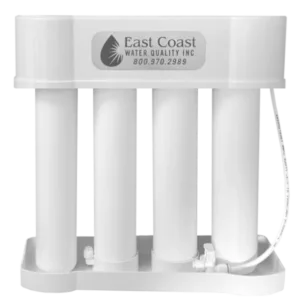 Drinking-Water Treatment
Protector Reverse Osmosis
Point-of-use treatment for highly filtered drinking and cooking water from a dedicated faucet, with a refrigerator connection available where practical.
- Broad reduction of dissolved contaminants
- Common option for fluoride, nitrate and dissolved solids
- Can reduce specified PFAS and lead when rated for them
- Improves drinking-water taste and clarity
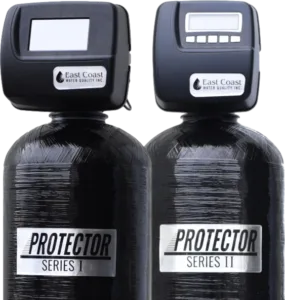 Whole-Home Treatment
Protector Whole-Home Conditioner
Whole-home treatment for hardness-related concerns and selected taste, odor and disinfectant issues, depending on the exact configuration.
- Treats showers, sinks, laundry and appliances
- Addresses hardness, scale and spotting
- Catalytic carbon can reduce chlorine and chloramine
- Not a substitute for RO or targeted PFAS filtration
 Targeted Whole-Home Filtration
Protector PFAS / Lead Series
Specialized whole-home filtration for specified PFAS and lead concerns, with performance based on the exact certified or tested model.
- Whole-home treatment at every connected fixture
- Designed for specified PFAS and lead reduction
- Often paired with RO for drinking-water protection
- Annual service or media replacement requirements apply
 Private-Well Treatment
Iron, Sulfur and Well-Water Systems
Property-specific treatment for iron staining, sulfur odor, low pH, tannins, sediment and other private-well conditions.
- Selected from appropriate water testing
- Whole-home oxidation and filtration options
- Neutralization available for acidic water
- May be combined with softening or RO
Not sure which page matches your concern?
Start with whether the problem affects only drinking water, every fixture in the home, a specific contaminant such as PFAS or lead, or a private-well condition. ECWQ can then help determine which system category deserves a closer look.
Common Virginia Beach Well Water Problems
Private wells around Virginia Beach can vary significantly by property. This video explains common local concerns including iron, sulfur, tannins, hardness and low pH—and why treatment order and a proper water analysis matter.
Read Transcript
You've got some well water out there in Virginia Beach. Frequent things we experience out there are tannins, iron, different types of iron, hydrogen sulfide (sulfur), hard water, and pH issues. It can be kind of ruthless in certain places. If you're out there in the Pungo area, Princess Anne, or some of the deeper areas getting closer to the North Carolina line, everywhere can be a little bit different, but we experience a lot of the same things throughout these areas. A lot of times, you can get lucky with the pH.
Now, that pH, again, we'd like to see at least 6.2. Even 6.0, I'm okay with, but once you get below that, even 6.0 can be a little bit risky for getting other water treatment equipment to work. Again, these are supposed to be educational videos. I can't go into everything. In fact, if you're a competitor trying to learn some of these things, that would be great too because we come behind systems all the time. We are Lowe's water treatment experts as well. We have over 27 Lowe's where we're the exclusive water treatment dealer. We come behind the do-it-yourselfers as well. You can have everything lined up perfectly, but if that pH isn't right, the equipment isn't going to work, especially iron filters, water softeners, and even tannin systems.
So, pH has got to be fixed correctly.
Then we get into the hardness in the water. The hardness can be extreme in some places, and in some places it can be a little softer. I like to use the term "survivable." If you're watching this and you have water that you can't even imagine because you just bought a home, I use the term survivable. When I say survivable, I don't mean you have bacteria or something you're really stressing over that you need to target. I'm talking about iron specifically. Tannins can fall into this category too, but if we just stay with iron, if you have high iron, you are not removing it with a water softener. Yes, you can make it better, and it can seem like a miracle the next day when you put one in because it's trapping some of it. But when you have high iron in some of these areas, you've got to go after an iron removal system first before you start running it into a water softener.
That's a whole different video: can a water softener remove iron? Some of the places out here have extremely high iron, and then it's ferric iron, which is oxidized iron. You're not trapping that with a water softener anyway. You can take out some dissolved iron with a water softener, but when you get into ferric iron, you have no chance, and it will destroy everything after it. That includes your appliances and every piece of water treatment equipment that may have been properly installed after the iron filter.
Then you have tannins. Tannins are a different animal all by themselves. The order of the equipment is so important when you have tannins, hardness, and iron. Depending on how much hardness you have will determine where the tannin filter goes. Iron filters will not remove tannins. Chemical feeders will not remove tannins. Water softeners will not remove tannins.
If you're wondering what tannins are, hopefully you're finding our website and videos educational and not just a bunch of products being blasted at you over and over again. That's something you're going to want to look into a little more throughout our site.
Now, I will say this about tannins. You could have a sales rep come out and tell you that you have extremely high tannins. What does that mean? I say tannins are only a problem if they're a problem to you. Tannins can have a light tea-looking color. They can have no color. They can have a kind of foul, earthy smell—not the rotten egg sulfur smell we haven't talked about yet, and not the metallic rust smell you're going to get with iron.
You could have tannins and they not be an issue. They may not have a smell, they might not have a color, and they may not be bothering you. That's a whole different topic when you get into alkaline water, organics, and different things there.
Keep in mind, if you don't want to feel overwhelmed and you have a genuine interest in improving your water, we'd love to come out and do a test for you and see what it is that you need—and what you don't need. Sometimes that's really the important part when you get salespeople coming in. Don't pile up a bunch of equipment that you don't need.
One thing we're never going to do is put more equipment in your home than you actually need because every time you add a system, you add the head of the unit. I call these three extra leak points: the inlet, the outlet, and the head. There are a lot of things you can do in one tank, and you may not need two tanks. Before you know it, you get the right salesperson in there, you've got a family of water treatment systems, six tanks lined up, no water pressure, and something that's ready to leak every time you blink an eye.
Having the right analysis is really, really important.
Just to give you a little education on Virginia Beach well water, some of the things you're experiencing—I don't want to say they're typical—but in some of these areas it is pretty frequent to have iron, sulfur, hardness, and occasionally tannins. Of course, you could have a variation of all of these and not have every one of them, but they are pretty common.
We're experienced in dealing with it. If you want an expert, give us a call. We definitely have more videos if you'd like to do your research before talking with anyone. You can also request service through the website, and you can even auto-book your appointment.
Hopefully this helps, and thank you.
What You'll Learn in This Video
- The most common well water problems found in the Virginia Beach area.
- Why pH must be corrected before installing other treatment equipment.
- Why high iron often requires an iron removal system before a water softener.
- How tannins affect water treatment system design.
- Why the order of water treatment equipment is critical.
- Why a professional water analysis helps avoid unnecessary equipment.
Use the Right Test for the Right Water Problem
A home water evaluation can identify common aesthetic conditions, but many health-related contaminants require specialized laboratory testing and careful sample collection.
Free In-Home Water Test
A thorough technician-led in-home evaluation that compares household water sources, explains the results in plain English and helps determine which treatment category may fit the home. It is not an extensive certified laboratory contaminant analysis.
Certified Laboratory Testing
PFAS, lead, arsenic, nitrate, bacteria and other specific contaminants may require certified laboratory testing using the correct sampling method.
Private-Well Testing
Well-water treatment should be based on the conditions at the property. Iron, sulfur, pH, tannins, sediment and bacteria can vary significantly from one well to another.
Continue With the Page That Matches Your Goal
Use these local pages to go deeper into the water report, treatment system or testing option most relevant to your home.
Water Quality Report
Read the official city report, water source, testing results and embedded PDF.
View the Virginia Beach Water Report →Reverse Osmosis
Explore highly filtered drinking and cooking water for a dedicated faucet and refrigerator line.
View Virginia Beach Reverse Osmosis →Water Softeners
Compare whole-home treatment for hardness, scale, spotting and chlorine or chloramine concerns.
View Virginia Beach Water Softeners →PFAS Water Filters
Compare whole-home PFAS and lead filtration with reverse osmosis drinking-water treatment.
View Virginia Beach PFAS Filters →Well Water Treatment
Explore property-specific systems for iron, sulfur, acidity, tannins and sediment.
View Virginia Beach Well Water Treatment →Free Water Test
Schedule a thorough in-home evaluation with live testing, source comparisons and treatment recommendations based on the findings.
Schedule a Virginia Beach Water Test →Move From Virginia Beach Water Data to Your Home's Water
Use the city and EWG information for context, then evaluate the water you actually use every day. A local technician can compare your tap, refrigerator-filtered and bottled water, explain the findings and recommend treatment only when the results support it.
Virginia Beach Water Problems FAQs
Does Virginia Beach tap water meet EPA standards?
The city's 2025 Water Quality Report states that Virginia Beach drinking water met the federal and state standards covered by the report for data collected during 2024.
Why does EWG show contaminants above its guidelines if the water meets EPA standards?
EPA maximum contaminant levels are enforceable legal standards. EWG health guidelines are non-enforceable benchmarks that can be much lower. A contaminant can therefore meet an EPA limit while appearing above an EWG guideline.
What contaminants does EWG show above its health guidelines?
The EWG data shown on this page lists arsenic, bromochloroacetic acid, bromodichloromethane, chloroform, hexavalent chromium, dibromoacetic acid, dibromochloromethane, dichloroacetic acid, HAA5, HAA9, total trihalomethanes and trichloroacetic acid above EWG guidelines.
Were PFAS detected in Virginia Beach's 2024 UCMR 5 samples?
The official city report states that no PFAS or other UCMR 5 contaminants were detected in the samples collected during Virginia Beach's 2024 monitoring. A non-detect result applies to the compounds, samples and reporting thresholds used in that testing.
Can lead vary from one Virginia Beach home to another?
Yes. The city report explains that lead can come from service lines and household plumbing materials. A system-wide report cannot determine the lead level at every individual faucet.
Which system is best for disinfection byproducts such as TTHMs and haloacetic acids?
Reverse osmosis with carbon pretreatment is generally the stronger point-of-use option for drinking water. Whole-home carbon may reduce many disinfection byproducts, but performance varies by compound, media, contact time and system configuration.
Does a water softener remove PFAS, arsenic or nitrate?
A standard water softener is designed primarily for hardness minerals. PFAS, arsenic, nitrate and similar dissolved contaminants require appropriately selected filtration or reverse osmosis rather than standard softening alone.
Which Virginia Beach water system treats hardness and scale?
A whole-home water softener or conditioner is the primary category for hardness, mineral scale and spotting throughout the home.
Which system treats iron or sulfur odor in well water?
Iron staining and hydrogen-sulfide odor are generally addressed with property-specific whole-home oxidation and filtration systems selected from appropriate well-water testing.
Does the free water test include PFAS testing?
No. ECWQ's free in-home evaluation is not certified PFAS testing. PFAS analysis requires specialized sample collection and laboratory testing.
Can one home need more than one water treatment system?
Yes. A homeowner may use whole-home treatment for hardness or disinfectants, a PFAS/lead system for targeted whole-home filtration, and reverse osmosis for highly filtered drinking water.
Find the Right Water Treatment System for Your Virginia Beach Home
Start with the water problem you want to solve, then compare the Virginia Beach system page designed for that treatment goal or schedule a free home water evaluation.
Virginia:
Virginia Beach, Norfolk, Chesapeake, Newport News, Hampton, Portsmouth, Suffolk, Williamsburg, Smithfield, Gloucester, Yorktown, Poquoson, Isle of Wight, Carrollton, Seaford, Grafton, Franklin, Emporia, Cape Charles, Courtland, Wakefield, Windsor, Naval Air Station Oceana, Naval Station Norfolk, Langley Air Force Base, Fort Eustis, Fort Monroe
North Carolina:
Raleigh, Durham, Fayetteville, Wilmington, Apex, Burlington, Wake Forest, Garner, Greenville, Jacksonville, Goldsboro, New Bern, Clayton, Kinston, Elizabeth City, Havelock, Hope Mills, Southern Pines, Pinehurst, Laurinburg, Lumberton, Henderson, Tarboro, Morehead City, Washington, Oak Island, Kill Devil Hills, Carolina Beach, Moyock, Shallotte, Williamston, Hampstead, Beaufort, Surf City, Whiteville, Newport, Ahoskie, Edenton, Swansboro, Plymouth, Emerald Isle, Kitty Hawk, Nags Head, Windsor, Sneads Ferry, Hubert, Hertford, Rocky Point, Manteo, Atlantic Beach, Camden, Castle Hayne, Bayboro, Maysville, Riegelwood, Creswell, Vanceboro, Oriental, Roper, Aulander, Rich Square, Currituck, Winton, Corolla, Camp Lejeune
 Hampton Roads VA / Northeast NC
3400 Airline Boulevard, Portsmouth VA 23701
757-966-7600
 Jacksonville NC / Morehead City NC
2582 NC-24, Newport NC 28570
252-777-5151

Wilmington NC / Leland NC
1026 Appleton Way NE #130, Leland, NC 28541
910-807-2300

Raleigh-Durham NC / Garner NC
313F Highway 70 East, Garner, NC 27529
919-238-9900