
Smithfield Water Problems, Contaminants & Treatment Options
Understand what the Town of Smithfield reports for its groundwater supply, how EWG's health-guideline data differs from legal drinking-water standards, and which treatment approach may fit the water concern you want to address at home.
What Is Reported in Smithfield Drinking Water?
Smithfield's 2025 Annual Water Quality Report says the town's drinking water met or exceeded the federal and state regulatory standards covered by the report. The municipal supply is groundwater from two deep wells in the Middle Potomac Aquifer. EWG uses separate health-based guidelines and a different reporting window, so its numbers should not be treated as the same test results as the town's annual report.
Regulatory Standards
The Town of Smithfield report lists applicable maximum contaminant levels, action levels and other compliance measures for regulated drinking-water substances.
EWG Health Guidelines
EWG health guidelines are non-enforceable benchmarks. A substance can be below a legal limit while still appearing above an EWG guideline.
Your Home
Utility-wide results do not tell you the exact condition at one faucet, and service lines, household plumbing and fixtures can affect lead, copper, taste, odor and other experiences at the tap.
Meeting a legal standard and exceeding an EWG guideline are not contradictory.
Use the Town of Smithfield report for regulatory compliance information. Use EWG as an additional health-guideline reference, while keeping its reporting period and non-regulatory status in mind.
Contaminants Shown Above EWG Health Guidelines
EWG's current page for Smithfield, Town of lists eight contaminants above EWG health guidelines. EWG's benchmarks are not EPA or Virginia legal limits, and its current utility page summarizes data across 2015–2024, with different contaminant groups using different sampling periods.
Bromodichloromethane
Bromoform
Chloroform
Dibromoacetic acid
Dibromochloromethane
Haloacetic acids (HAA5)
Radium, combined (-226 & -228)
Total trihalomethanes (TTHMs)
About the numbers: EWG's database and Smithfield's 2025 Annual Water Quality Report do not necessarily summarize the same samples or reporting periods. Do not compare their individual values as though they came from one test event.
Other Contaminants Listed for Smithfield
EWG also lists six other detected substances for the Town of Smithfield utility. Some have an EWG health guideline and some do not; EWG does not categorize these six in its “exceed guidelines” group on the current utility page.
| Substance | EWG “This Utility” Value | EWG Guideline | Legal Limit Shown by EWG |
|---|---|---|---|
| Chlorate | 211 ppb | 210 ppb | No legal limit shown |
| Fluoride | 1.17 ppm | No EWG health guideline | 4 ppm |
| Lithium | 6.66 ppb | No EWG health guideline | No legal limit shown |
| Manganese | 0.296 ppb | 100 ppb | No legal limit shown |
| Molybdenum | 3.95 ppb | 40 ppb | No legal limit shown |
| Strontium | 0.0151 ppb | 1,500 ppb | No legal limit shown |
What the Latest Town Report Shows
Smithfield's 2025 Annual Water Quality Report provides the regulatory context for the municipal groundwater supply and notes that different substances are monitored on different required schedules.
Municipal Reverse Osmosis
Smithfield uses reverse osmosis to reduce naturally occurring fluoride in groundwater from two deep wells in the Middle Potomac Aquifer.
Chlorine
The report lists chlorine at 1.5 ppm, with a 2025 range of 0.079–1.99 ppm, and no violation.
Disinfection Byproducts
The report lists 11 ppb TTHM with a 10–11 ppb range and 1 ppb HAA5 with a 0–1 ppb range, both marked no violation.
Fluoride
The report lists fluoride at 1.19 ppm, with a 2025 range of 0.99–1.34 ppm, and no violation.
| Reported Measure | Level Found | Reported Range / Context | Monitoring Date |
|---|---|---|---|
| Copper | 0.138 ppm* | ND–0.3 ppm; action level 1.3 ppm | 2023 |
| Lead | ND* | ND–6 ppb; action level 15 ppb | 2023 |
| Combined Radium-226 & -228 | 0.1 pCi/L | MCL 5 pCi/L | 2024 |
| Gross Beta Particle Activity | 1.6 pCi/L | Report notes 50 pCi/L as EPA level of concern | 2024 |
| Sodium | 75.9 ppm | Report identifies sodium as unregulated | 2024 |
*Lead and copper values are 90th-percentile results under the Lead and Copper Rule. The town report marks the listed regulated results as having no violation.
Different rows can come from different monitoring years.
The 2025 report includes 2023 lead and copper data, 2024 radiological and sodium data, and 2025 disinfectant, disinfection-byproduct and fluoride data. That reflects different monitoring schedules rather than one single test date.
Why Smithfield Water Can Taste, Smell or Behave Differently at the Tap
Disinfectant Taste or Odor
Smithfield uses sodium hypochlorite for disinfection. Some households notice disinfectant taste or odor more readily than others, even when the municipal water meets regulatory requirements.
Naturally Occurring Fluoride
Smithfield's groundwater naturally contains fluoride. The town operates a reverse-osmosis plant specifically to reduce it before distribution, and the 2025 report lists finished-water fluoride at 1.19 ppm.
Household Plumbing
Lead and copper can come from service-line or household plumbing materials. A utility-wide result cannot determine what is present at one home's faucet.
PFAS and Lead Need Different Kinds of Context
PFAS in EWG's Smithfield Data
EWG's current Smithfield utility page includes 2024 testing in its overall 2015–2024 dataset and lists multiple PFAS compounds among chemicals tested for but not detected, including PFOA, PFOS, PFHxS, PFBA, PFHxA and PFPeA.
The Town's 2025 regulated-contaminant table does not list PFAS results, so this page does not treat EWG's database and the annual town report as interchangeable sources.
Lead Can Be Property-Specific
Smithfield's report explains that lead in drinking water is primarily associated with service lines and home plumbing materials. Its 2023 lead sampling lists a 90th-percentile result of not detected, with an individual range from not detected to 6 ppb and no violation.
The town also reports that it completed its Lead Service Line Inventory. Homeowners concerned about lead at a specific faucet should use appropriate property-specific laboratory testing.
ECWQ's free in-home test is not certified contaminant testing.
Use appropriate laboratory analysis for PFAS, lead, bacteria or another contaminant that requires certified testing.
Which Smithfield Water Treatment System Addresses Which Problem?
No single system is the best choice for every water concern. The correct treatment depends on the substance, whether you want to treat one drinking-water faucet or the whole home, and the exact performance claims of the selected model.
Read this matrix as a treatment guide—not a blanket removal guarantee.
Actual reduction depends on system configuration, media, membrane performance, flow rate, maintenance, water chemistry and certification. Confirm claims against the exact product specifications for the system selected.
| Water Problem or Contaminant | Reverse Osmosis | Whole-Home Conditioner / Carbon | PFAS / Lead Series | Iron / Sulfur or Well System | Best Page to Visit |
|---|---|---|---|---|---|
| General drinking-water concerns | |||||
| Dissolved drinking-water contaminants | Often a strong point-of-use approach when the exact system is rated for the target | Not the primary purpose of standard conditioning | Depends on exact media and documented claim | Not a standard iron/sulfur treatment goal | Reverse Osmosis → |
| Disinfectant taste or odor | Carbon stages can improve drinking-water taste and odor | Appropriate carbon can address whole-home disinfectant taste or odor | Depends on system configuration | Not the primary purpose | Water Conditioners → |
| Hardness, scale and spotting | Treats point-of-use drinking water, not whole-home hardness | Primary whole-home hardness treatment | Not the primary purpose | May be paired with well treatment when hardness is also present | Water Conditioners → |
| Disinfection chemicals and byproducts | |||||
| Total trihalomethanes (TTHMs) | RO plus carbon can be a strong drinking-water approach | Activated or catalytic carbon may reduce many volatile byproducts | Depends on exact carbon/media configuration | Not the primary purpose | Reverse Osmosis → |
| Haloacetic acids (HAA5) | RO is generally the stronger point-of-use option when appropriately rated | Carbon performance varies by compound, contact time and configuration | Depends on exact system design | Not the primary purpose | Reverse Osmosis → |
| EWG-listed contaminants above health guidelines | |||||
| Bromodichloromethane | RO plus carbon can be considered for point-of-use reduction | Activated carbon can reduce many trihalomethanes; performance depends on system design | Not the primary PFAS/lead target | Not the primary purpose | Reverse Osmosis → |
| Chloroform | RO plus carbon can be considered for point-of-use reduction | Activated carbon can reduce chloroform and other trihalomethanes | Not the primary PFAS/lead target | Not the primary purpose | Reverse Osmosis → |
| Dibromoacetic acid | RO can be considered for point-of-use reduction when appropriately rated | Carbon performance varies | Not the primary PFAS/lead target | Not the primary purpose | Reverse Osmosis → |
| Dibromochloromethane | RO plus carbon can be considered for point-of-use reduction | Activated carbon can reduce many trihalomethanes | Not the primary PFAS/lead target | Not the primary purpose | Reverse Osmosis → |
| Radium, combined (-226 & -228) | RO may reduce radium when the exact system is appropriately rated and maintained | A standard conditioner should not be presented as a radium treatment without a documented claim | Not the primary PFAS/lead target | Not a standard iron/sulfur claim | Reverse Osmosis → |
| PFAS and lead concerns | |||||
| PFAS, including PFOA and PFOS | Strong point-of-use option when certified or tested for specified PFAS | Carbon can reduce some PFAS, but performance and breakthrough vary | Primary whole-home PFAS treatment category | Not the primary purpose | |
| Lead | Point-of-use RO can reduce lead when rated for it | A standard conditioner is not a lead filter | Primary whole-home lead filtration category | Not the primary purpose | |


Start With Where You Want the Water Treated
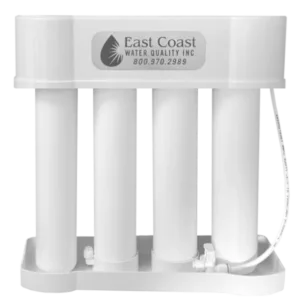
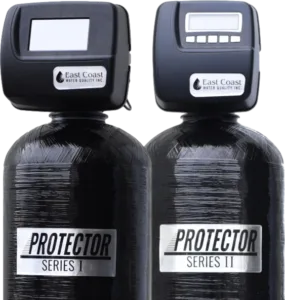
A kitchen drinking-water system, whole-home conditioner and targeted PFAS filter solve different problems.
Reverse Osmosis
Point-of-use filtration for drinking, cooking, coffee and ice, with performance depending on the exact system and target contaminant.
Explore Smithfield Reverse Osmosis →Water Conditioners
Whole-home treatment for hardness and selected taste or odor goals, based on the equipment and media selected.
Explore Smithfield Water Conditioners →PFAS Water Filters
Targeted whole-home and point-of-use options for homeowners specifically concerned about PFAS.
Explore Smithfield PFAS Filters →Do Not Apply Smithfield City-Water Results to a Private Well
The Town of Smithfield data on this page describes the municipal groundwater supply drawn from two deep wells and treated at the town water plant. A private residential well can have completely different conditions and needs property-specific testing.
Municipal Water
Use the Town of Smithfield reporting to understand the public supply, then consider household plumbing and the water-quality goal you want to address.
Private-Well Water
Iron, sulfur odor, sediment, hardness, pH, bacteria and other well conditions should be evaluated from the actual property's water rather than inferred from town-water data.
Use the Right Test for the Water Question
Free In-Home Water Test
Useful for evaluating common household water conditions and discussing treatment options. It is not a certified laboratory contaminant test.
Laboratory Contaminant Testing
Use appropriate laboratory analysis when you need a property-specific result for PFAS, lead, bacteria or another contaminant requiring certified testing.
Private-Well Testing
Well-water treatment should begin with the actual well's chemistry and microbiological needs rather than municipal water assumptions.
Smithfield Water Problems FAQs
Is Smithfield tap water within legal standards?
Smithfield's 2025 Annual Water Quality Report says the drinking water provided by the town met or exceeded the federal and state regulatory standards covered by the report. EWG's separate health guidelines are non-regulatory and can be lower than legal limits.
Where does Smithfield drinking water come from?
The municipal supply is groundwater pumped from two deep wells in the Middle Potomac Aquifer.
Why does Smithfield use reverse osmosis at its water plant?
The town says its reverse-osmosis plant is used to reduce naturally occurring fluoride in the groundwater. The 2025 report lists finished-water fluoride at 1.19 ppm.
What does EWG list above its health guidelines for Smithfield?
EWG currently lists bromodichloromethane, bromoform, chloroform, dibromoacetic acid, dibromochloromethane, HAA5, combined radium and total trihalomethanes above EWG health guidelines for the Town of Smithfield utility. Those guidelines are not EPA or Virginia legal drinking-water limits.
Does Smithfield use chlorine for disinfection?
Yes. The town report says sodium hypochlorite is used for disinfection. It lists chlorine at 1.5 ppm with a 2025 range of 0.079–1.99 ppm and no violation.
Were PFAS detected in the EWG Smithfield data?
EWG's current Smithfield page lists multiple PFAS compounds among chemicals tested for but not detected, including PFOA and PFOS. The town's 2025 regulated-contaminant table does not list PFAS results.
Does the town report tell me whether there is lead at my faucet?
No. Smithfield's report provides system-wide monitoring context and explains that lead can come from service lines and home plumbing. A property-specific concern requires appropriate testing at the home.
Would reverse osmosis help with Smithfield water concerns?
Reverse osmosis can be appropriate for many point-of-use drinking-water goals, but performance depends on the exact system and the substance you want to reduce. It is not a substitute for selecting whole-home treatment when the concern affects water throughout the house.
Do I need a water conditioner in Smithfield?
A water conditioner may make sense when the goal involves whole-home hardness, mineral scale, spotting or an appropriate taste-and-odor treatment need. The right choice depends on the water at your property and the exact equipment selected.
Move From Smithfield Water Data to Your Home's Water
Use the official town report and EWG data for citywide context, then evaluate the water concern you actually want to solve at your house.
Virginia:
Virginia Beach, Norfolk, Chesapeake, Newport News, Hampton, Portsmouth, Suffolk, Williamsburg, Smithfield, Gloucester, Yorktown, Poquoson, Isle of Wight, Carrollton, Seaford, Grafton, Franklin, Emporia, Cape Charles, Courtland, Wakefield, Windsor, Naval Air Station Oceana, Naval Station Norfolk, Langley Air Force Base, Fort Eustis, Fort Monroe
North Carolina:
Raleigh, Durham, Fayetteville, Wilmington, Apex, Burlington, Wake Forest, Garner, Greenville, Jacksonville, Goldsboro, New Bern, Clayton, Kinston, Elizabeth City, Havelock, Hope Mills, Southern Pines, Pinehurst, Laurinburg, Lumberton, Henderson, Tarboro, Morehead City, Washington, Oak Island, Kill Devil Hills, Carolina Beach, Moyock, Shallotte, Williamston, Hampstead, Beaufort, Surf City, Whiteville, Newport, Ahoskie, Edenton, Swansboro, Plymouth, Emerald Isle, Kitty Hawk, Nags Head, Windsor, Sneads Ferry, Hubert, Hertford, Rocky Point, Manteo, Atlantic Beach, Camden, Castle Hayne, Bayboro, Maysville, Riegelwood, Creswell, Vanceboro, Oriental, Roper, Aulander, Rich Square, Currituck, Winton, Corolla, Camp Lejeune
 Hampton Roads VA / Northeast NC
3400 Airline Boulevard, Portsmouth VA 23701
757-966-7600
 Jacksonville NC / Morehead City NC
2582 NC-24, Newport NC 28570
252-777-5151

Wilmington NC / Leland NC
1026 Appleton Way NE #130, Leland, NC 28541
910-807-2300

Raleigh-Durham NC / Garner NC
313F Highway 70 East, Garner, NC 27529
919-238-9900