Reverse Osmosis Systems in Goldsboro, NC
Get highly filtered drinking and cooking water from a professionally installed under-sink reverse osmosis system, with local water context from Goldsboro's 2025 drinking-water results.
Is Reverse Osmosis a Good Choice for Goldsboro Drinking Water?
For Goldsboro homeowners who want more filtration than a standard pitcher or refrigerator filter, reverse osmosis is a strong point-of-use option for reducing a broad range of dissolved contaminants in drinking and cooking water. Goldsboro's 2025 report includes PFAS detections, fluoride, sodium, disinfection byproducts and other water-quality data that homeowners may consider when comparing drinking-water treatment.
- Installs beneath the kitchen sink.
- Supplies a dedicated drinking-water faucet.
- Can connect to many refrigerator ice makers.
- Uses multiple filtration stages.
- Provides water for drinking, cooking, coffee, tea and ice.
Cleaner Drinking Water Without Bottled-Water Hassle
Municipal water may meet drinking-water standards while homeowners still prefer an additional layer of filtration for the water they consume every day.
Broad Filtration
Reduces many dissolved substances that basic filters may not target.
Better Coffee and Cooking
Use filtered water for beverages, soups, pasta, baking and food preparation.
Cleaner-Tasting Ice
An optional refrigerator connection can supply compatible ice makers and dispensers.
PFAS Protection
RO can reduce specified PFAS compounds when the exact system supports those claims.
Less Plastic Waste
Reduce dependence on repeatedly purchased bottled water.
Local Support
East Coast Water Quality serves Goldsboro with professional installation and annual service for residential water-treatment systems.
Goldsboro Water Concerns Reverse Osmosis May Address
Goldsboro's 2025 Annual Drinking Water Quality Report identifies the Neuse River as the municipal source used in 2025. The report includes system-level results for PFAS, fluoride, disinfection byproducts, lead and copper, sodium and other characteristics. Reverse osmosis treats drinking and cooking water at a dedicated faucet rather than the entire home.
PFAS
Goldsboro's 2025 UCMR5 table reports averages of 5.8 ppt PFOS, 4.77 ppt PFOA, 2.63 ppt PFBS, 1.3 ppt PFNA, 1.63 ppt HFPO-DA (GenX) and 1.87 ppt PFHxS. RO can reduce specified PFAS when the exact system supports those claims.
Lead
The city's most recent lead sampling shown in the 2025 report had a 90th-percentile result of 0 ppb in 2024, with zero sampled sites above the action level. Because plumbing can affect lead at an individual faucet, property-specific concerns require appropriate testing.
Fluoride
Goldsboro reports 0.60 ppm fluoride in February 2025. Reverse osmosis is commonly used when a homeowner wants additional fluoride reduction at the drinking-water faucet.
Nitrate & Nitrite
The 2025 report lists nitrate below 10 ppm and nitrite below 1 ppm, with no MCL violation reported. RO is commonly considered for additional point-of-use nitrate and nitrite reduction.
Disinfection Byproducts
Goldsboro reports a highest LRAA of 57 ppb for TTHM and 50 ppb for HAA5 in 2025, with no MCL violation reported for either. Carbon pretreatment and RO can be useful drinking-water treatment tools depending on the exact compound and system.
Sodium
Goldsboro's report lists sodium at 33.8 ppm in February 2025. Reverse osmosis is designed to reduce dissolved solids, including excess sodium, at the drinking-water faucet.
EWG Context
EWG separately lists several Goldsboro contaminants above its non-enforceable health guidelines. Those historical EWG values use different reporting periods and should not be treated as the same sampling event as the city's 2025 report.
Point-of-Use Treatment
RO is designed for highly filtered drinking and cooking water. It is not a substitute for whole-home treatment when the goal involves hardness, scale, showers, laundry or appliances.
See the complete Goldsboro contaminant comparison.
The Goldsboro Water Problems page compares current city-report information and EWG data with reverse osmosis, whole-home conditioners, PFAS/lead filtration and private-well treatment.
Goldsboro hardness note: The supplied 2025 Annual Drinking Water Quality Report does not list a municipal hardness result, so no citywide hardness level is assigned here. Reverse osmosis is not a whole-home softener; its primary role is highly filtered drinking and cooking water.
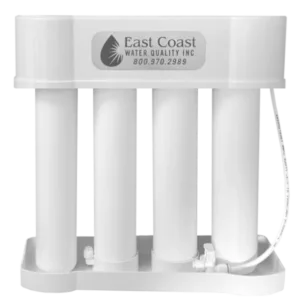
How the Protector Reverse Osmosis System Works
Each stage protects the system, reduces contaminants and improves finished-water taste.
Sediment Filter
Captures rust, dirt, sand and suspended particles.
Activated Carbon
Reduces chlorine and taste-and-odor compounds.
RO Membrane
Separates purified water from many dissolved contaminants.
Polishing Filter
Provides final taste enhancement before dispensing.
Broad Drinking-Water Contaminant Reduction
Exact performance depends on the installed membrane, cartridges, certification, feed-water conditions and maintenance.
Reverse Osmosis vs. Pitchers, Refrigerator Filters and Bottled Water
| Feature | Protector RO | Pitcher | Refrigerator | Bottled Water |
|---|---|---|---|---|
| RO membrane | Yes | No | Usually no | Varies |
| Dissolved-contaminant reduction | Strong | Limited | Limited | Varies |
| PFAS reduction | When rated | Model dependent | Model dependent | Varies |
| Fluoride reduction | Common RO target | Most do not | Most do not | Varies |
| TDS reduction | Yes | No | Usually no | Varies |
| Dedicated faucet | Yes | No | No | No |
| Refrigerator connection | Optional | No | Built in | No |
| Professional installation | Included | DIY | Factory installed | None |
| Plastic bottle waste | None | Low | None | High |
Reverse Osmosis vs. Whole-Home Water Treatment
Reverse Osmosis
- Drinking and cooking water
- Reduces TDS and dissolved contaminants
- Installs under the sink
- Can feed a refrigerator
- Does not soften the whole home
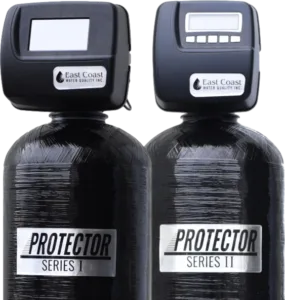
Whole-Home Conditioner
- Treats showers, sinks and appliances
- Can address hardness when household testing and goals support softening
- Can include catalytic carbon
- Does not replace RO for dissolved drinking-water contaminants
- Can be paired with RO
Professional Reverse Osmosis Installation and Annual Service in Goldsboro
Installation Includes
- Plumbing and cabinet inspection
- Under-sink system installation
- Dedicated faucet installation
- Storage tank connection
- Optional refrigerator line where practical
- Flushing, sanitization and leak testing
Annual Service Includes
- Scheduled filter replacement
- Complete system sanitization
- Water-pressure check
- Storage-tank inspection
- Leak inspection
- Performance verification
Warranty terms apply. Lifetime parts coverage depends on purchaser eligibility, proper maintenance and current warranty terms.
Protector Inline Calcite Remineralizer
For homeowners who prefer a mineral-water taste, the optional post-RO calcite remineralizer adds selected minerals back after purification.
Calcium
Adds calcium after the RO process.
Magnesium
Supports a mineral-style taste profile.
Alkalinity
Can improve balance and taste preference.
Continue Your Local Water Research
Water Problems
Compare local contaminants with the right treatment systems.
View water problems →Water Quality Report
Read the official report, local source and testing results.
View the report →PFAS Water Filters
Compare point-of-use RO with whole-home PFAS and lead filtration.
Compare PFAS systems →Water Conditioners
Explore whole-home conditioning for chlorine or chloramine concerns, taste, odor and household-specific softening goals.
Explore water conditioners →Well Water Treatment
Explore treatment for iron, sulfur, pH and sediment.
Explore well water →Free Water Test
Schedule a thorough in-home water evaluation for common household water concerns and treatment planning.
Schedule a test →Goldsboro Reverse Osmosis FAQs
Were PFAS detected in Goldsboro's 2025 water monitoring?
Yes. Goldsboro's 2025 UCMR5 table reports PFOS, PFOA, PFBS, PFNA, HFPO-DA (GenX) and PFHxS. Reverse osmosis can reduce specified PFAS when the exact installed system is tested or certified for those claims.
Does reverse osmosis remove lead?
RO can reduce lead at the drinking faucet when the selected system is rated for lead reduction. Goldsboro's most recent lead sampling shown in the 2025 report had a 90th-percentile result of 0 ppb in 2024, but household plumbing can make lead a property-specific concern.
Does RO remove fluoride from Goldsboro water?
Fluoride reduction is a common reverse-osmosis treatment goal. Goldsboro's 2025 report lists fluoride at 0.60 ppm in February 2025.
Can a Goldsboro RO system connect to my refrigerator?
Many installations can include a line to a compatible refrigerator ice maker or water dispenser when the plumbing layout allows it.
How often should the reverse osmosis system be serviced?
Annual service is ideal for many households, though filter life varies with household water use and feed-water conditions.
Is reverse osmosis the same as a water conditioner?
No. Reverse osmosis treats drinking and cooking water at a dedicated faucet. A whole-home water conditioner addresses different goals throughout showers, sinks, laundry and appliances.
Does Goldsboro's 2025 report list water hardness?
No hardness result is listed in the supplied 2025 Annual Drinking Water Quality Report, so a Goldsboro municipal hardness value is not assumed on this page.
Does ECWQ's free water test include laboratory PFAS or lead testing?
No. The free in-home evaluation is not certified PFAS, lead or complete laboratory contaminant testing. Specialized concerns require appropriate laboratory analysis.
Get Highly Filtered Drinking Water in Your Goldsboro Home
Schedule a free home water evaluation and speak with East Coast Water Quality about reverse osmosis installation, refrigerator connections, maintenance and system options.
Virginia:
Virginia Beach, Norfolk, Chesapeake, Newport News, Hampton, Portsmouth, Suffolk, Williamsburg, Smithfield, Gloucester, Yorktown, Poquoson, Isle of Wight, Carrollton, Seaford, Grafton, Franklin, Emporia, Cape Charles, Courtland, Wakefield, Windsor, Naval Air Station Oceana, Naval Station Norfolk, Langley Air Force Base, Fort Eustis, Fort Monroe
North Carolina:
Raleigh, Durham, Fayetteville, Wilmington, Apex, Burlington, Wake Forest, Garner, Greenville, Jacksonville, Goldsboro, New Bern, Clayton, Kinston, Elizabeth City, Havelock, Hope Mills, Southern Pines, Pinehurst, Laurinburg, Lumberton, Henderson, Tarboro, Morehead City, Washington, Oak Island, Kill Devil Hills, Carolina Beach, Moyock, Shallotte, Williamston, Hampstead, Beaufort, Surf City, Whiteville, Newport, Ahoskie, Edenton, Swansboro, Plymouth, Emerald Isle, Kitty Hawk, Nags Head, Windsor, Sneads Ferry, Hubert, Hertford, Rocky Point, Manteo, Atlantic Beach, Camden, Castle Hayne, Bayboro, Maysville, Riegelwood, Creswell, Vanceboro, Oriental, Roper, Aulander, Rich Square, Currituck, Winton, Corolla, Camp Lejeune
 Hampton Roads VA / Northeast NC
3400 Airline Boulevard, Portsmouth VA 23701
757-966-7600
 Jacksonville NC / Morehead City NC
2582 NC-24, Newport NC 28570
252-777-5151

Wilmington NC / Leland NC
1026 Appleton Way NE #130, Leland, NC 28541
910-807-2300

Raleigh-Durham NC / Garner NC
313F Highway 70 East, Garner, NC 27529
919-238-9900